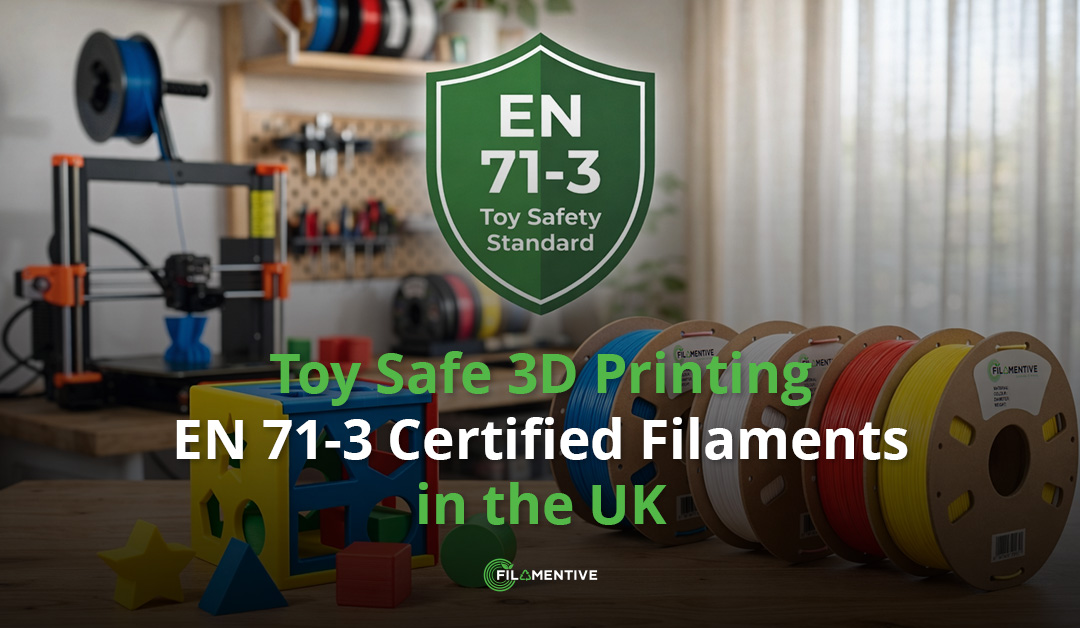
As 3D printing moves beyond prototyping into real-world product manufacturing, more designers, educators and businesses are asking an important question:
What filament should you use if your 3D printed parts may be handled by children?
From classroom models and educational kits to consumer products and toys, safety considerations become more important when products are intended for younger users. One of the most relevant standards in Europe for evaluating material safety is EN 71-3, which assesses whether certain elements can migrate from materials used in toys.
In this guide we explain what EN 71-3 filament means, how the standard applies to 3D printing materials, and how manufacturers can approach toy safe 3D printing responsibly.
What is EN 71-3?
EN 71 is the European safety standard for toys, covering a range of potential hazards such as mechanical safety, flammability and chemical composition.
EN 71-3 focuses on chemical safety, specifically the migration of certain elements from toy materials. The test assesses whether potentially harmful elements could leach out of a material if it were ingested or exposed to saliva.
The elements assessed include substances such as: Lead, Cadmium, Mercury, Arsenic, Chromium, Nickel, Tin compounds, Antimony,
During testing, materials are placed in a simulated extraction solution and analysed to determine how much of each element may migrate from the material. For plastic materials such as 3D printing filament, the relevant category is Category III: polymer materials.
If the migration values remain below the limits defined in the standard, the material passes EN 71-3.
Why EN 71-3 Certified Filament Matters for 3D Printing
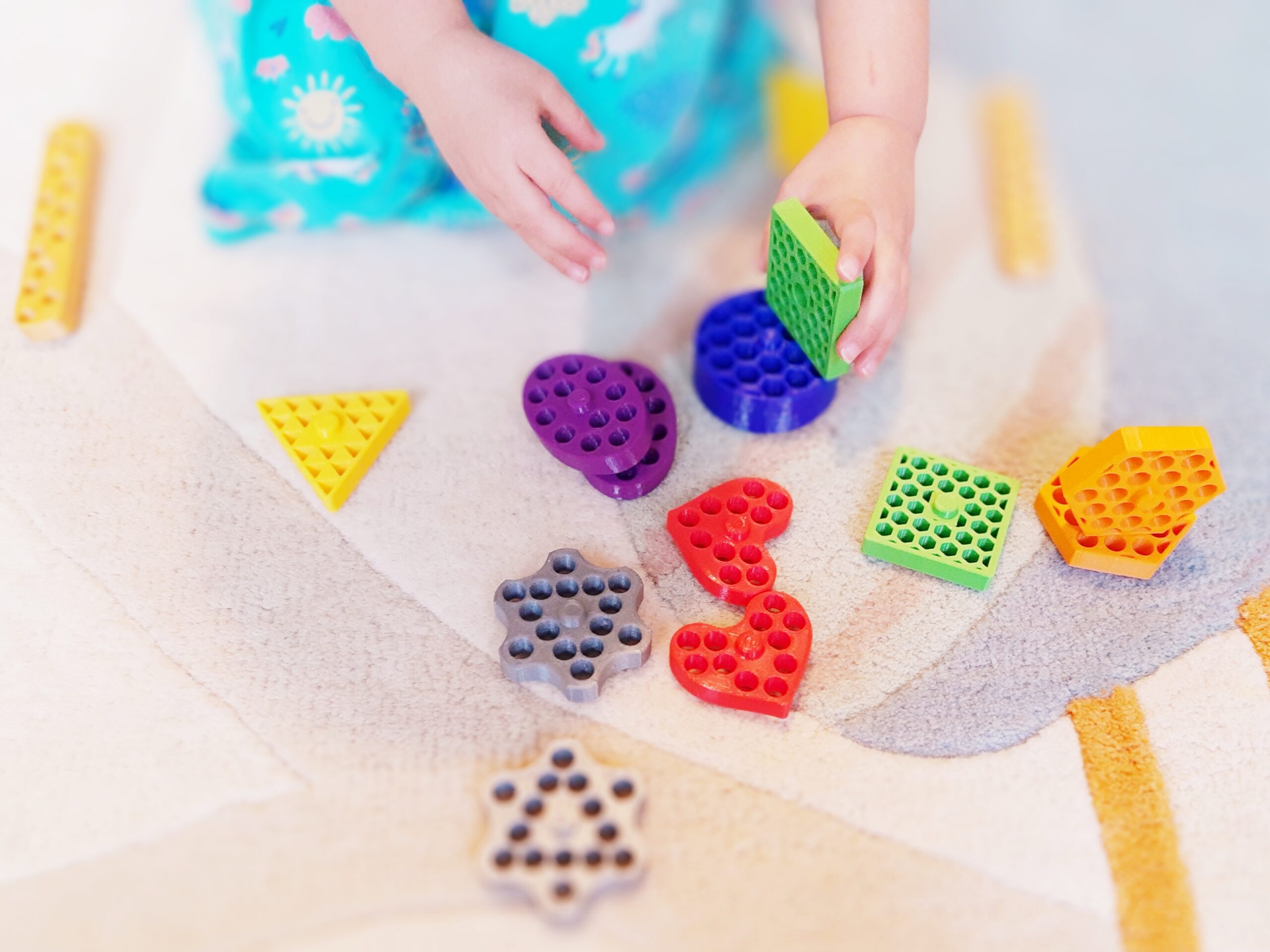
The accessibility of 3D printing means that many individuals and organisations now manufacture products outside traditional production environments.
These applications often include items that may be used by children, such as:
Educational models and learning tools
Classroom 3D printing projects
Maker kits and STEM resources
Figurines and collectibles
Custom toys and consumer products
When developing these products, the choice of material matters. Using an EN 71-3 tested filament demonstrates that the base material has been independently assessed for restricted element migration.
For businesses producing consumer products or educational items, this can help support responsible material selection and provide reassurance to customers.
Filamentive PLA Filaments Tested to EN 71-3 in the UK
At Filamentive, we believe transparency around material safety is important for designers, educators and manufacturers. Selected materials from our range have therefore been independently tested to EN 71-3.
The following materials were tested:
Filamentive PLA Filament
Filamentive PLA Matte Filament
Testing evaluated migration limits for the elements specified in EN 71-3 using ICP-OES analytical methods. The submitted samples passed the migration limits defined for Category III polymer materials, confirming that the tested materials comply with the standard.
For customers looking for toy safe filament or filament for toys, this testing provides an additional level of confidence in the chemical composition of the base material.
Explore Filamentive EN 71-3 Certified Filaments
Is EN 71-3 Filament “Toy Safe”?
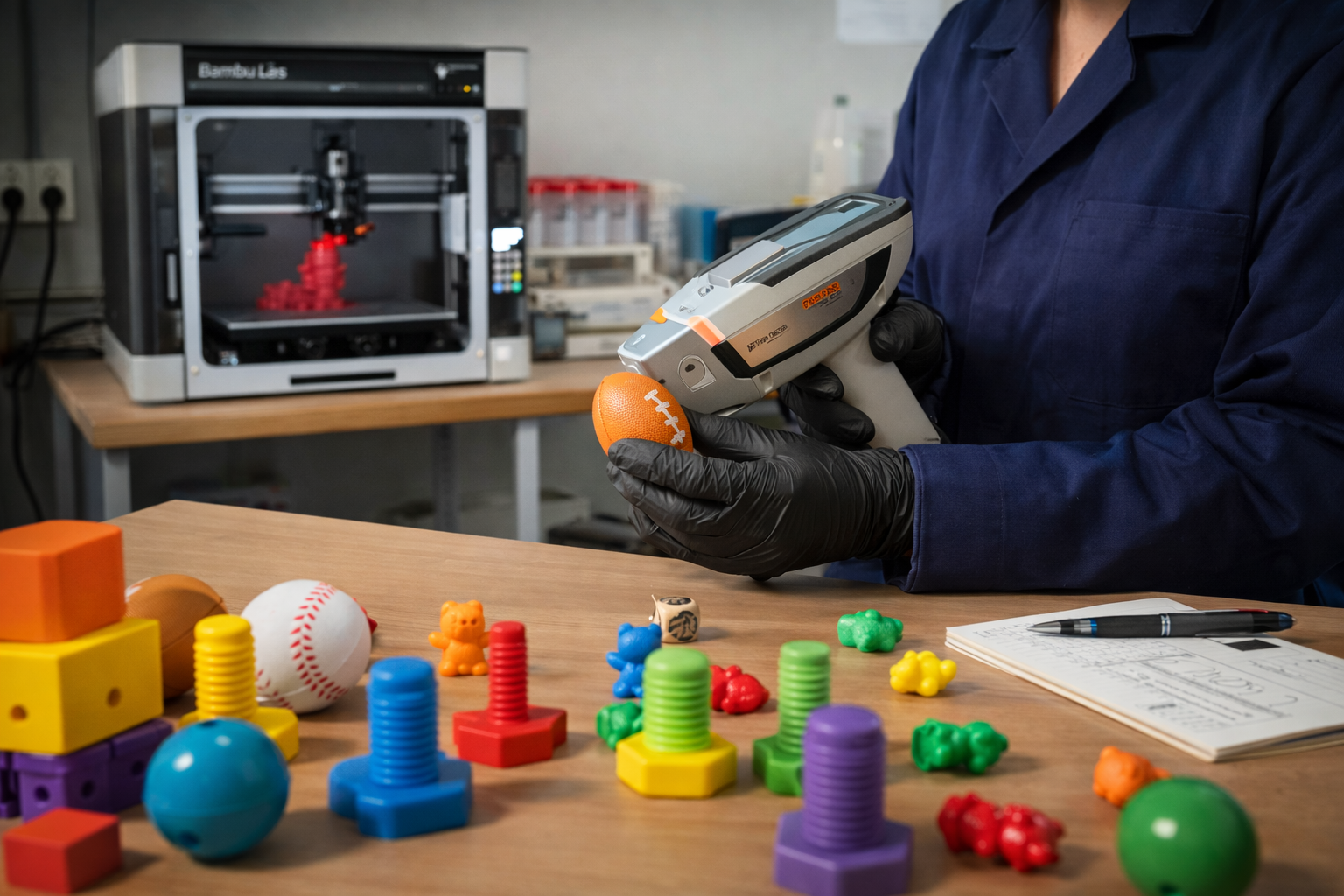
It is important to use accurate terminology when discussing toy safe filament.
An EN 71-3 filament means the material itself has been tested for migration of certain elements in accordance with the standard.
However, toy compliance applies to finished products, not just the raw materials used to manufacture them.
3D printing introduces several variables that may affect a finished product, including:
Printing temperature and processing conditions
Surface finish and geometry
Additives or pigments within the filament
Post-processing such as painting or coating
For this reason, the final 3D printed article may require its own safety testing if it is intended to be marketed as a toy.
When Should 3D-Printed Products Be Tested?
If you are manufacturing toys or children’s products commercially, regulatory compliance usually requires testing of the finished product.
Toy safety standards typically include:
EN 71-1 — Mechanical and physical safety
EN 71-2 — Flammability
EN 71-3 — Chemical migration
Using an EN 71-3 tested filament can support responsible material selection, but it should not replace product-level testing where full toy certification is required.
Choosing the Right Filament for 3D Printing Toy Products
When selecting a filament for toys or children’s products, several factors are worth considering.
First, material traceability is important. Manufacturers should be able to provide documentation regarding the chemical safety of their materials.
Second, consistency matters. Reliable filament manufacturers maintain controlled pigment and additive systems to ensure predictable results across batches.
Finally, independent laboratory testing provides additional reassurance that the material has been assessed against recognised safety standards such as EN 71-3.
Shop EN 71-3 Certified Filament for Toy Safe UK 3D Printing
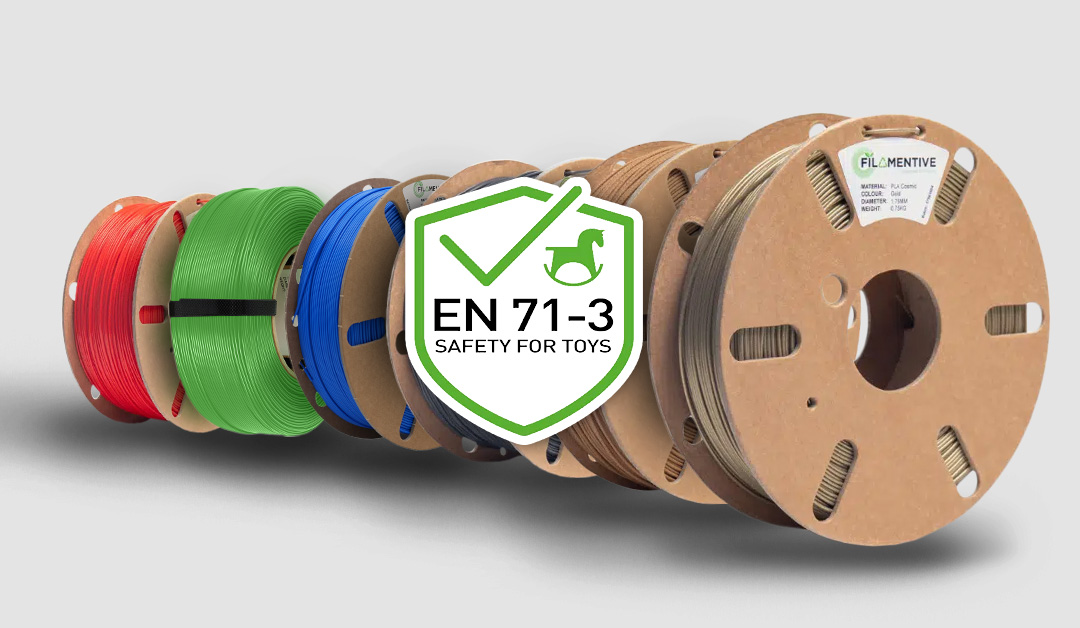
Filamentive supplies high-quality 3D printing materials designed for reliable printing and transparent material documentation.
As of March 2026, Filamentive PLA and PLA Matte filaments have been independently tested against EN 71-3 migration limits, confirming compliance of the tested materials with the standard for polymer materials.
For designers, educators and manufacturers developing products that may be handled by children, this testing provides an additional layer of confidence when selecting a toy safe filament.
If you would like more information about EN 71-3 filament, material documentation or product specifications, our team will be happy to help.
Disclaimer: EN 71-3 testing referenced above applies only to representative filament specimens submitted to an independent laboratory. Results confirm compliance of the tested material with migration limits defined by EN 71-3:2019+A2:2024 for Category III polymer materials. Compliance of the raw filament does not automatically extend to finished 3D printed objects. Where toy safety compliance is required, independent testing of the final printed product by an accredited laboratory is recommended.