

The MJF Powder Waste Problem in 3D printing
Multi Jet Fusion (MJF), developed by HP, has become one of the most widely used technologies for producing Nylon PA12 parts. However, MJF Nylon printing comes with a hidden problem: every build leaves behind large amounts of unfused powder.
Studies indicate that MJF PA12 and SLS workflows result in 50–60% of powder going unused after each print; for a busy print setup, this can add up to more than 1,000 kg of wasted PA12 powder every year, representing not only a sustainability issue but also a significant cost burden, considering that PA12 powder costs upwards of $100/kilo.
With virgin PA12 filament and powder being expensive, the need for better MJF recycling solutions is now more urgent than ever, both financially and environmentally.
What’s the Environmental Impact of MJF Powder Waste?
Much of the MJF Nylon waste powder still ends up in landfill or incineration, where it contributes to plastic pollution, microplastic leakage, or harmful emissions.
In the UK alone, an estimated 400,000 kg of plastic is wasted annually from 3D printing, showing the urgent need for sustainable solutions such as recycled nylon filament.
Can MJF Powder Waste Become Recycled 3D Printing Filament?
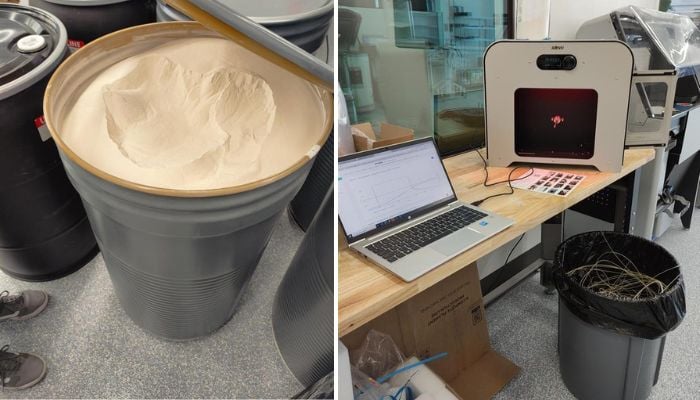
Yes, one proven solution is to recycle MJF PA12 powder into new PA12 filament for FFF 3D printers. While used powder is unsuitable for further MJF builds, it can be extruded into recycled filament because PA12 remains a thermoplastic, meaning it can be melted and reshaped into a usable filament for 3D printing.
3devo is pioneering MJF recycling, producing around 3 kg per day of recycled PA12 filament from waste Nylon powder.
Meanwhile, large-scale adopters like BMW Group are closing the loop, recycling 12 tons of powder annually into new filament and granulates for both tooling and automotive parts.
What are the Benefits of Recycled 3D Printing Filament?
Waste Reduction: Every spool of recycled nylon filament keeps material out of landfill and incineration. Recycling 1 tonne of nylon prevents up to 7 tonnes of CO₂ emissions, according to Aquafil.
Resource Conservation: Using recycled filament reduces reliance on virgin oil-based raw materials and conserves fossil resources.
Lower Carbon Footprint: Studies show that using PA12 waste from powder bed 3D printing can reduce carbon emissions by up to 89% compared to virgin alternatives. Therefore, recycling MJF waste and incorporating recycled nylon filament supports corporate sustainability such as Net Zero.
Cost Savings: By turning powder waste into usable nylon filament, companies reduce raw material spend and improve production efficiency.
MJF Powder Recycling and Recycled Nylon Filament in the UK
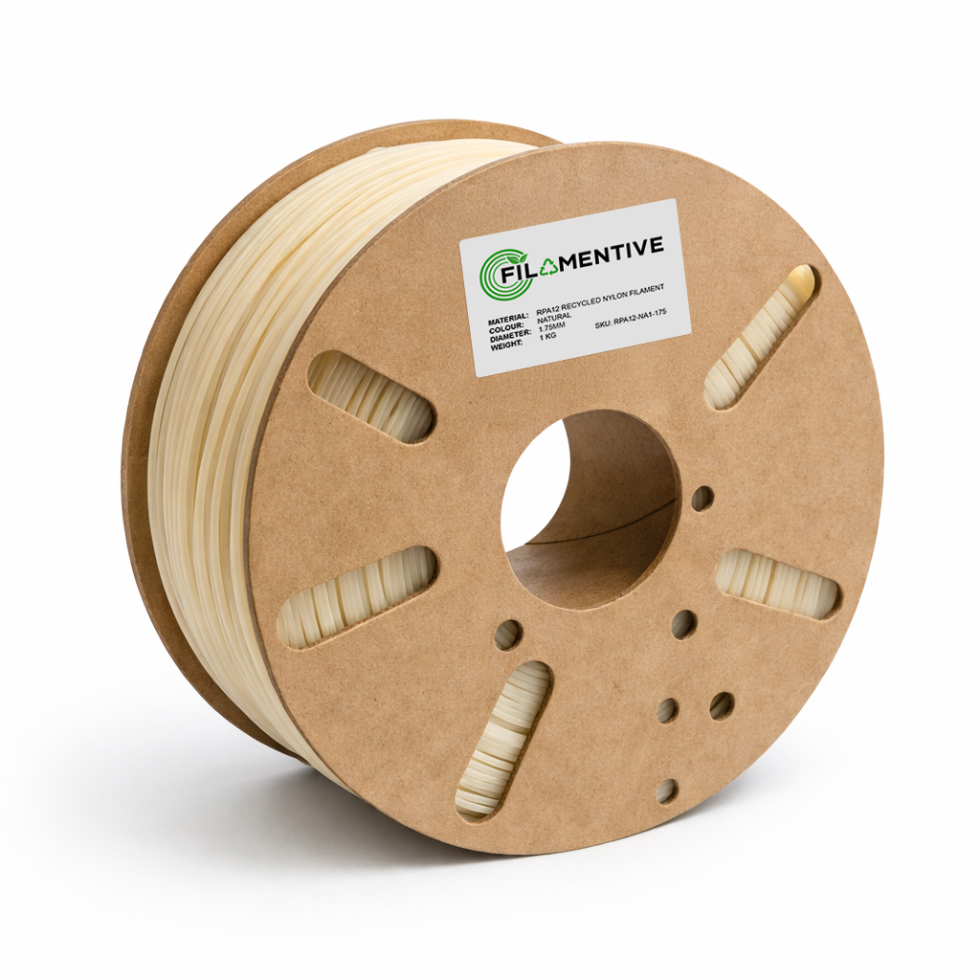
As of February 2026, Filamentive is proud to announce what we believe is the world’s first commercially available 100% recycled rPA12 filament made from unused MJF powder waste.
Developed with 3devo, rPA12 marks an early but important step towards circular additive manufacturing. While still in its early stages, this ‘v2’ market-ready release demonstrates two clear outcomes: a viable recycled nylon filament for sustainable engineering applications that reduces reliance on virgin polymer, and a practical case study for high-volume MJF operators exploring closed-loop production models to improve both operational efficiency and long-term financial sustainability.