
UK 3D Print User? What to Do With Empty 3D Printing Spools
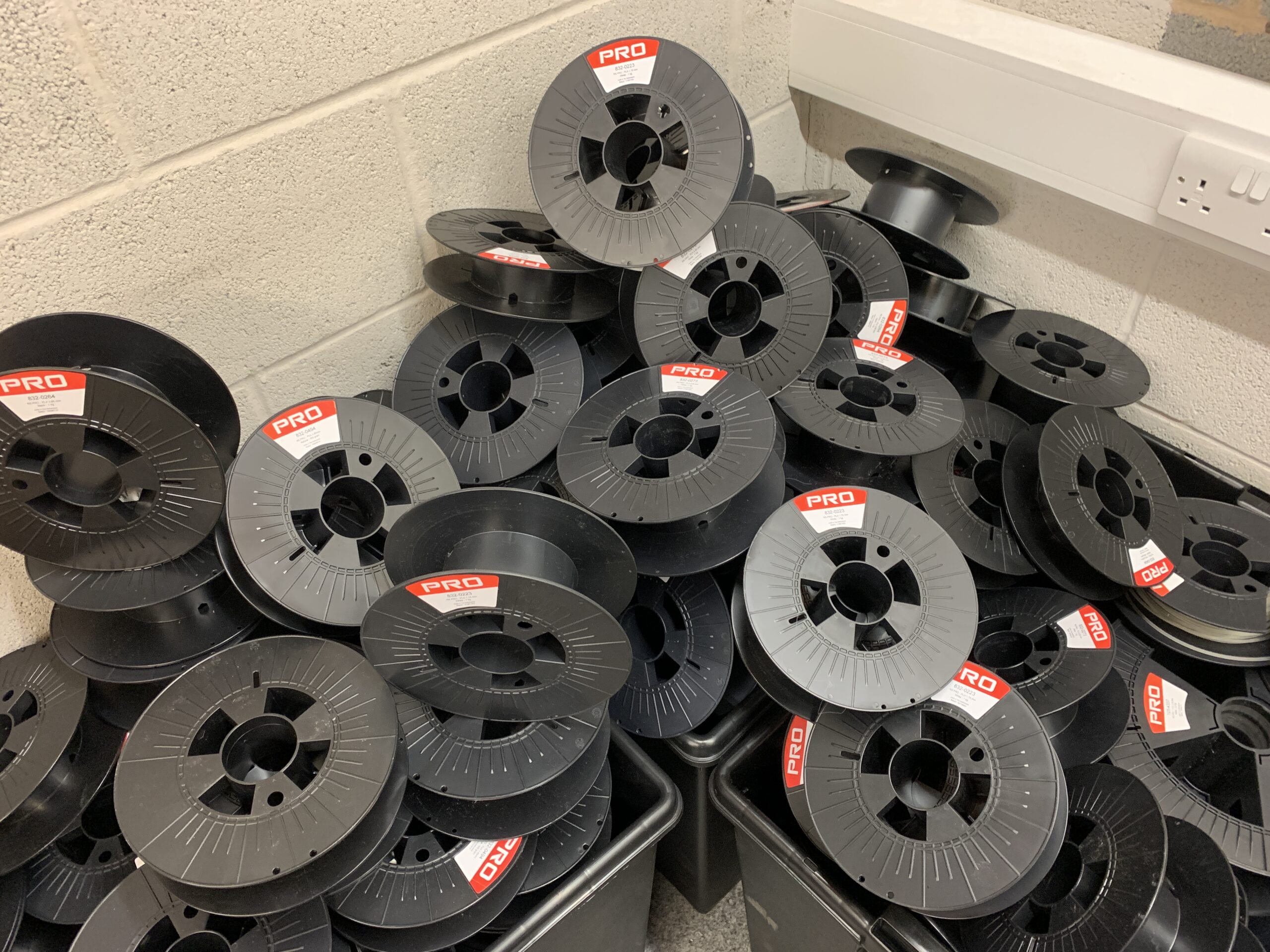
If you print regularly, empty spools pile up fast. Most end up in a drawer, then a landfill bin, because there’s no obvious next step. That’s the real problem: not that spools are unrecyclable, but that there’s no simple, well-signposted route for what to do with them once they’re empty.
The good news is there’s a clear order of priority that actually helps: reduce first, reuse second, recycle as the fallback. Here’s what that looks like in practice.
1. Reduce: the best spool is one you never had to deal with
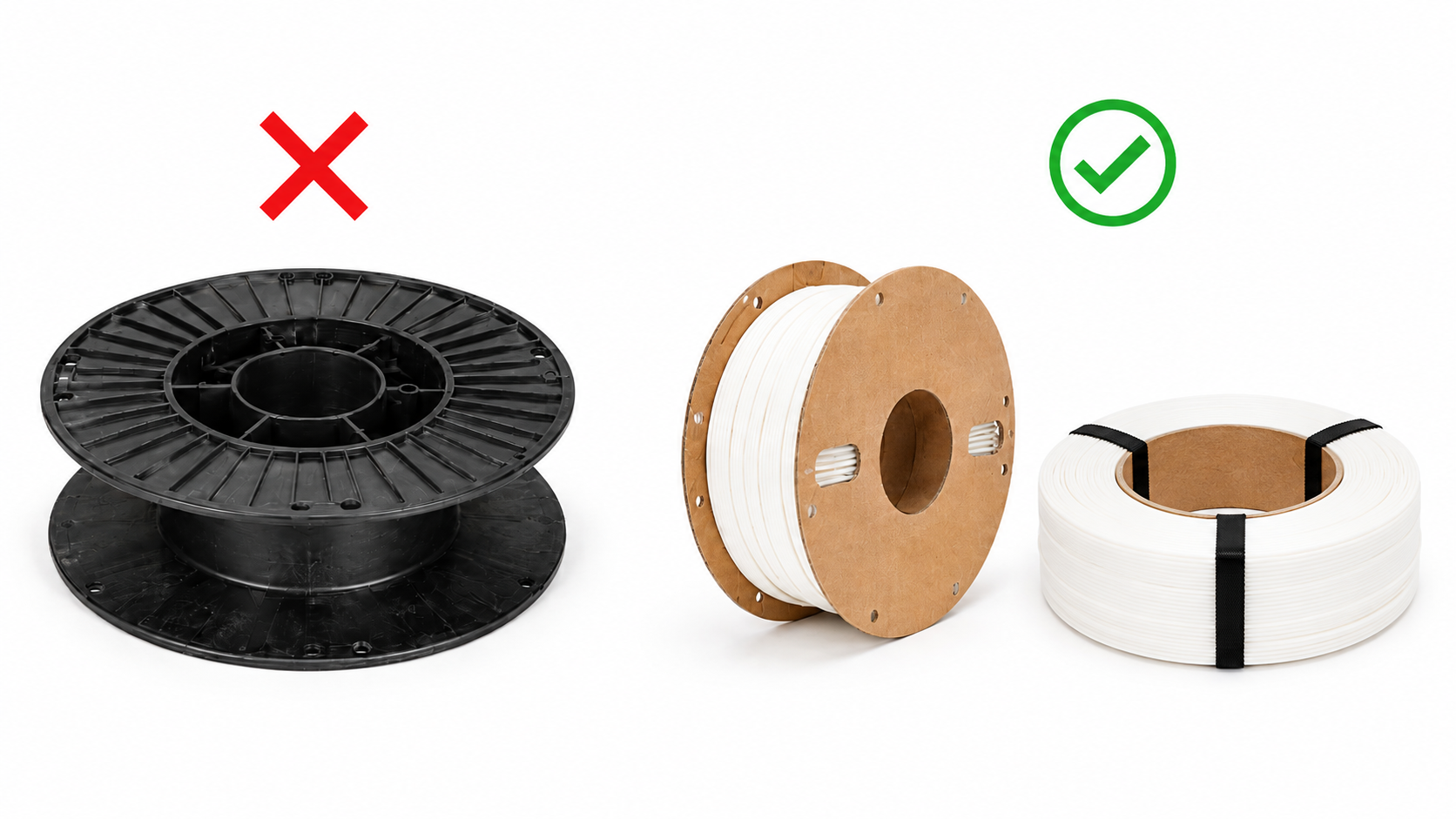
Prevention beats cure. If you’re buying filament regularly, the biggest single change you can make is choosing formats that don’t create spool waste in the first place.
Cardboard spools. Standard plastic spools are usually PP or ABS — not commonly accepted in kerbside recycling, and rarely worth the effort of separating for a single reel. Cardboard spools solve this at the source: they go straight into normal paper and card recycling, no separate scheme required. Filamentive was the first UK filament brand to switch to cardboard spools, in 2018, and extended cardboard to our larger [2kg+] formats in 2020.
ReFill. For AMS and multi-colour setups in particular — Bambu Lab users will recognise this — a spool-less refill system removes the spool from the equation entirely rather than making it easier to dispose of. If you’re printing at volume, this is usually the biggest waste reduction you can make in one decision.
If you want the fuller comparison of spool formats and their environmental footprint, we’ve covered it in detail here: The Greener Filament Spool — MasterSpool vs Cardboard and How One Decision Could Reduce Your 3D Printing Waste by 20%
2. Reuse: get more life out of the spools you already have
Before anything goes in a bin, it’s worth asking whether the spool still has a job to do.
Ask the manufacturer. Some filament brands run takeback or refill schemes for their own spools — it’s always worth checking with your supplier before assuming there’s no option.
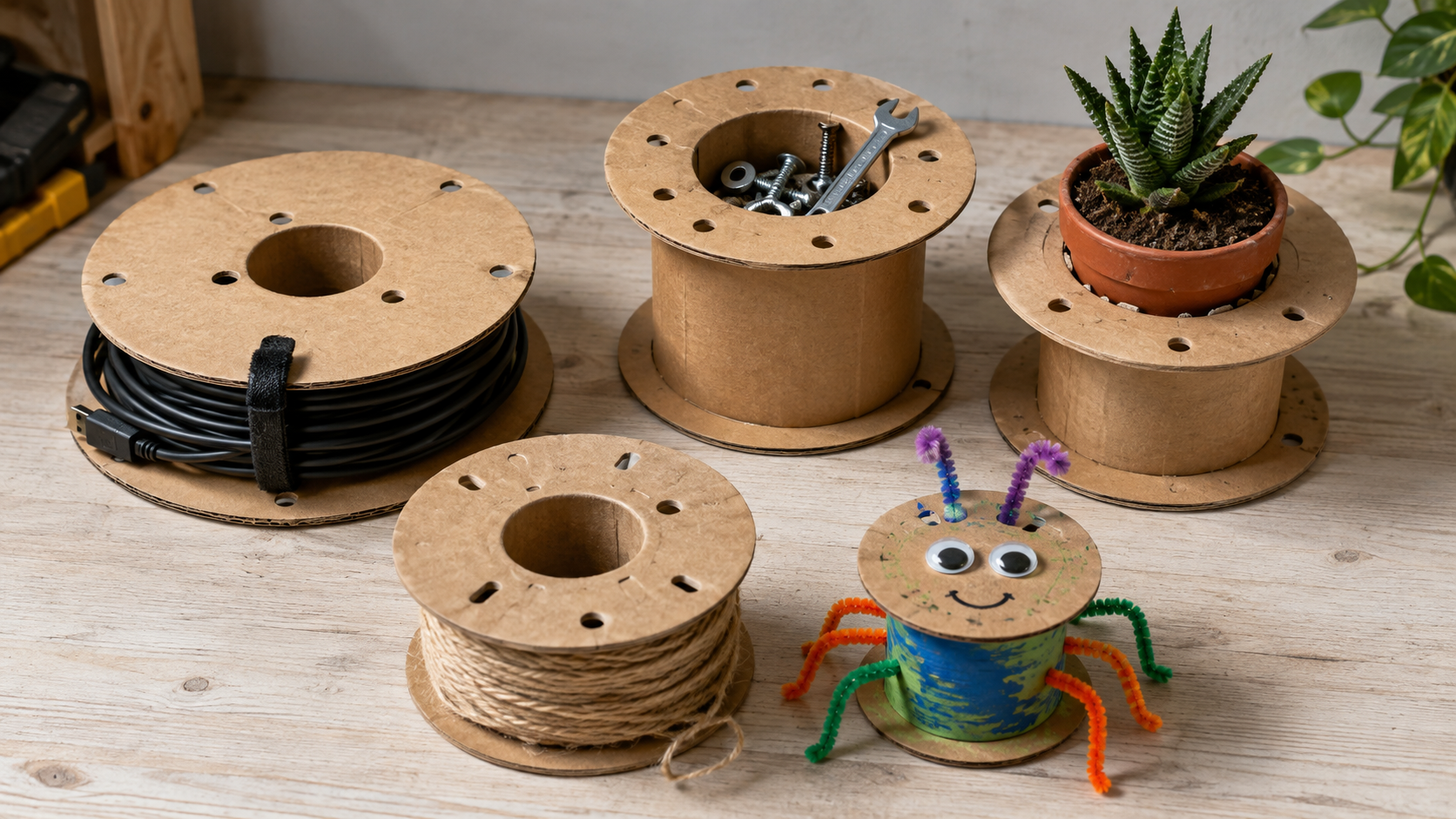
Upcycle it. Empty spools are genuinely useful raw material for makers. Common uses include:
- Cable and cord organisers for the workshop or desk
- Wire, tape, or ribbon storage
- Small parts or hardware bins
- Plant pot bases or garden twine holders
- Kids’ craft projects and school workshops
Pass it on. If you don’t have a use for it, someone nearby probably does. Local makerspaces, schools, and community workshops often want spools for storage or projects. Filament buyers who purchase loose or refill filament are also worth checking with directly — an empty spool from you can be their next spool.
3. Recycle: when empty filament spool reuse isn’t practical
Recycling is the right fallback when reducing and reuse genuinely aren’t options — but it’s worth knowing what’s realistic.
A single spool is unlikely to be accepted through standard kerbside plastic recycling. It’s usually the wrong material stream, and most household schemes aren’t set up to sort it.
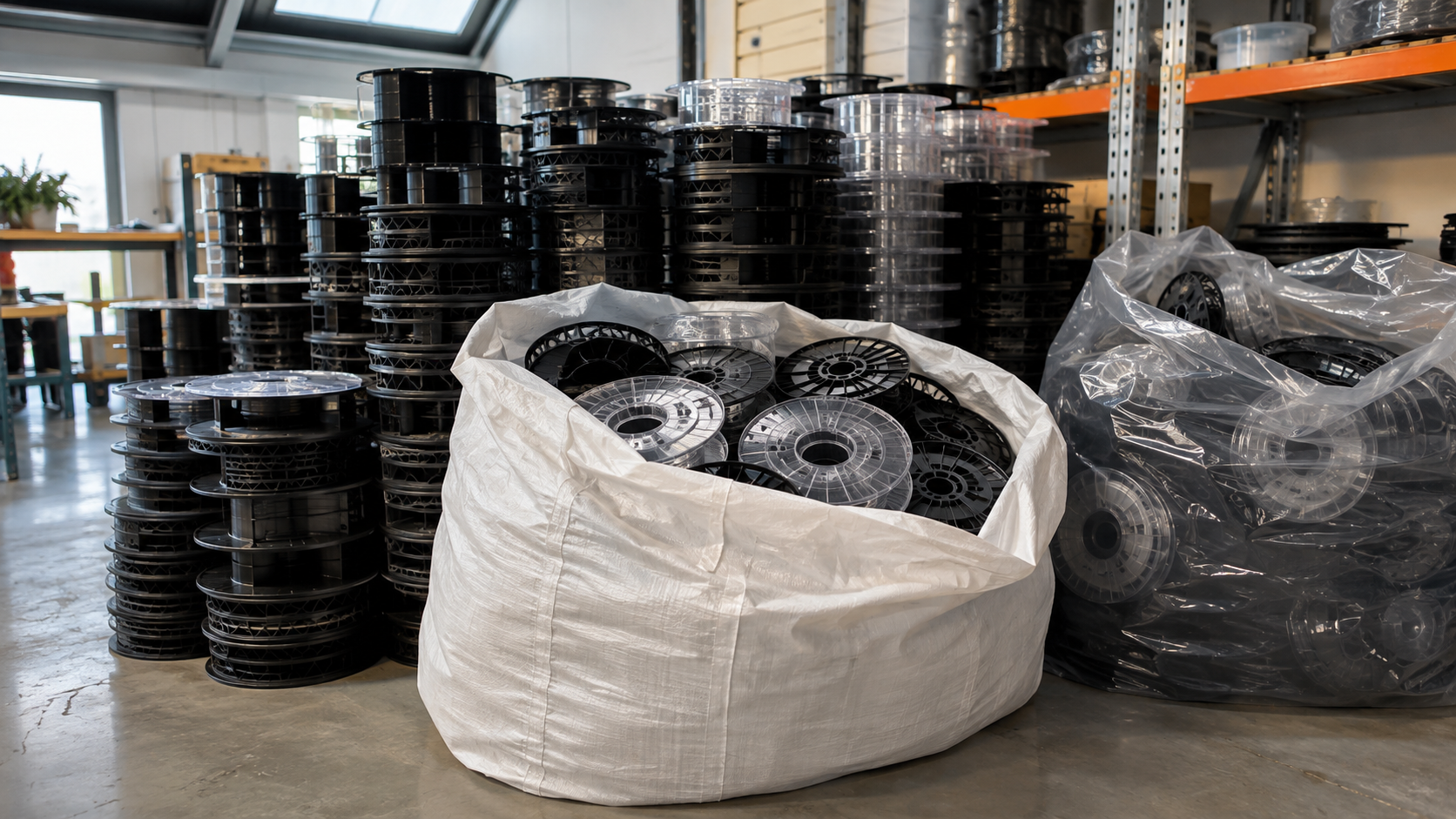
Volume changes the picture. If you’re a school, business, or makerspace with a genuine stockpile of plastic spools, it’s worth contacting local plastics recyclers or reprocessors directly. Clean, sorted plastic in bulk is sometimes accepted for recycling, and in some cases has scrap value rather than being a disposal cost — this depends on material, condition, and volume, so a direct conversation with a recycler is the only reliable way to find out what’s possible.
For the wider picture on recycling 3D printing waste in the UK — see our full guide: How to Recycle 3D Printing Waste in the UK, 2026 Guide