
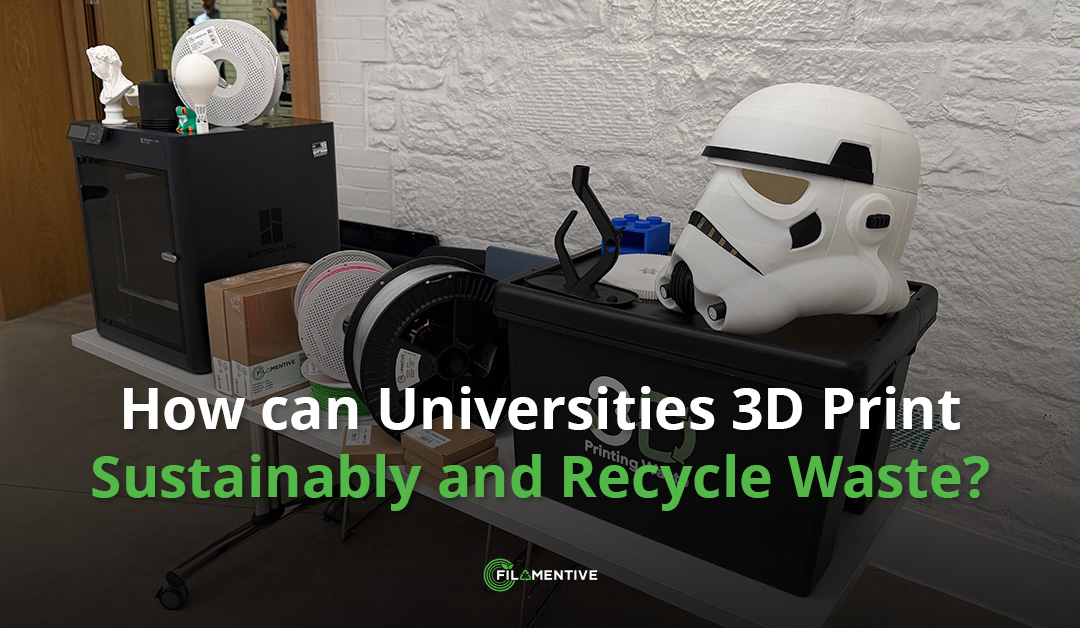
In April 2026, Filamentive sponsored TechNet Scotland, an event which platformed technical staff to share knowledge, best practice and lessons learned in relation to sustainability to ensure laboratories and workshops operate in a sustainable way. For us, it was a chance to get in the room with the people who run university 3D printing spaces to understand what’s actually happening on the ground.
What we found reinforced something we’ve believed for a while: universities are ready to take sustainability seriously in their facilities — they just need the right supply chain and support structure to make it practical.
TechNet Scotland: Helping Sustainability in Higher Education
TechNet Scotland brought together technicians from across Scotland’s higher education sector. It’s a working event — panels, conversations, and direct knowledge-sharing between institutions navigating similar challenges.
For Filamentive, sponsoring the event was a deliberate strategic choice. University makerspaces are one of the fastest-growing segments for 3D printing in the UK. They’re also one of the most sustainability-conscious — driven by institutional net zero commitments, student expectations, and increasingly, procurement policy.
Being in the room matters. It’s where relationships get built.
Sustainable 3D Printing across the University of Edinburgh
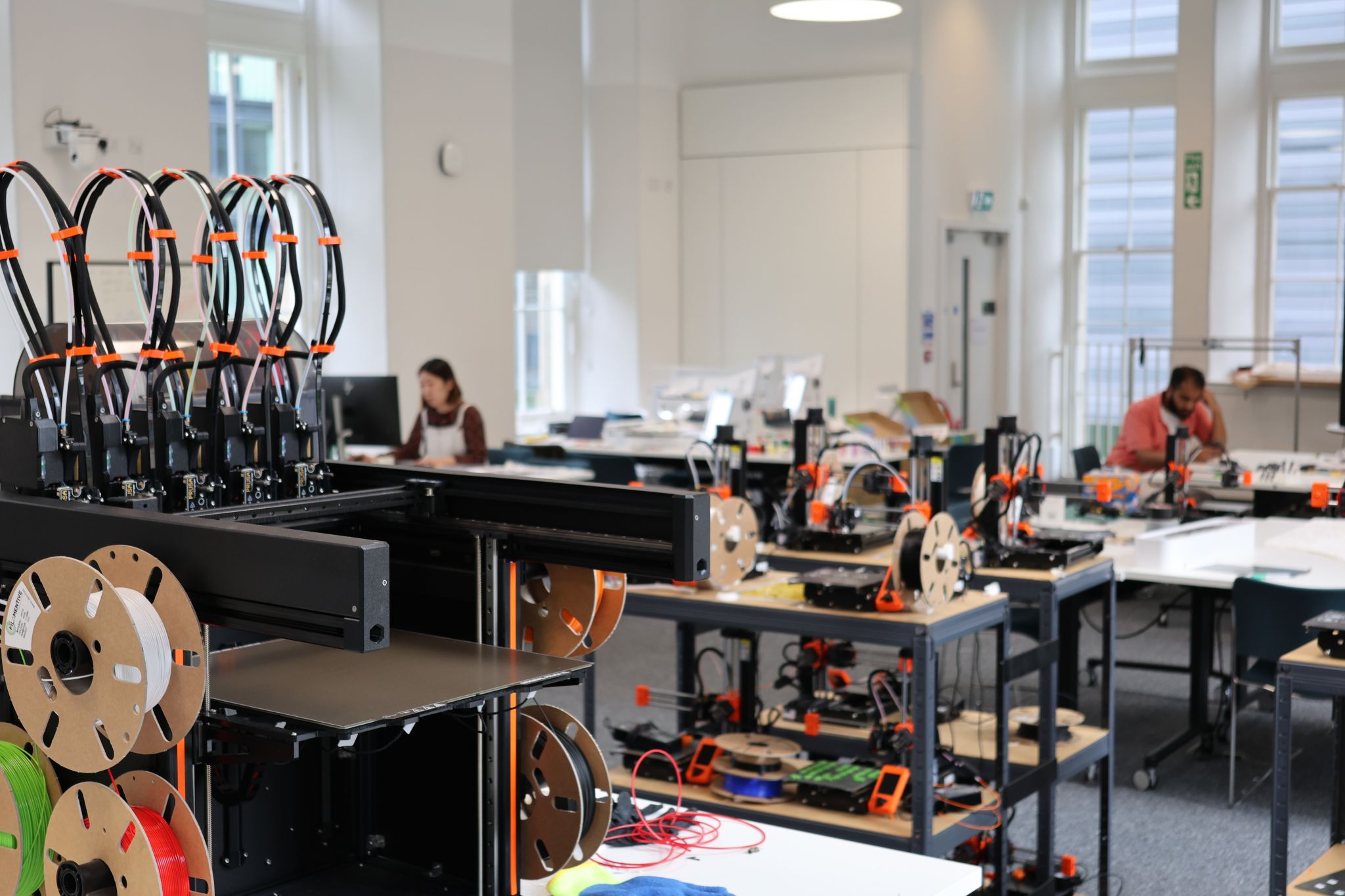
The University of Edinburgh is one of the UK’s largest research universities, and its 3D printing footprint reflects that scale. Printing happens across multiple departments and sites, each with different needs, volumes, and user bases:
- uCreate MakerSpace
- Mechanical Engineering Makerspace
- Edinburgh College of Art
- Edinburgh Future’s Institute (EFI) Makerspace
That kind of distributed operation is common in large universities. It means materials purchasing, waste management, and sustainability reporting often happen in silos — which creates both a challenge and an opportunity for suppliers who can offer a joined-up solution.
WORKING WITH UNIVERSITIES
Running a university 3D printing workshop? We offer sustainable filament supply, B2B pricing, and a free PLA waste recycling scheme for eligible customers.
Bambu Lab is Reshaping University 3D Printing Workflows
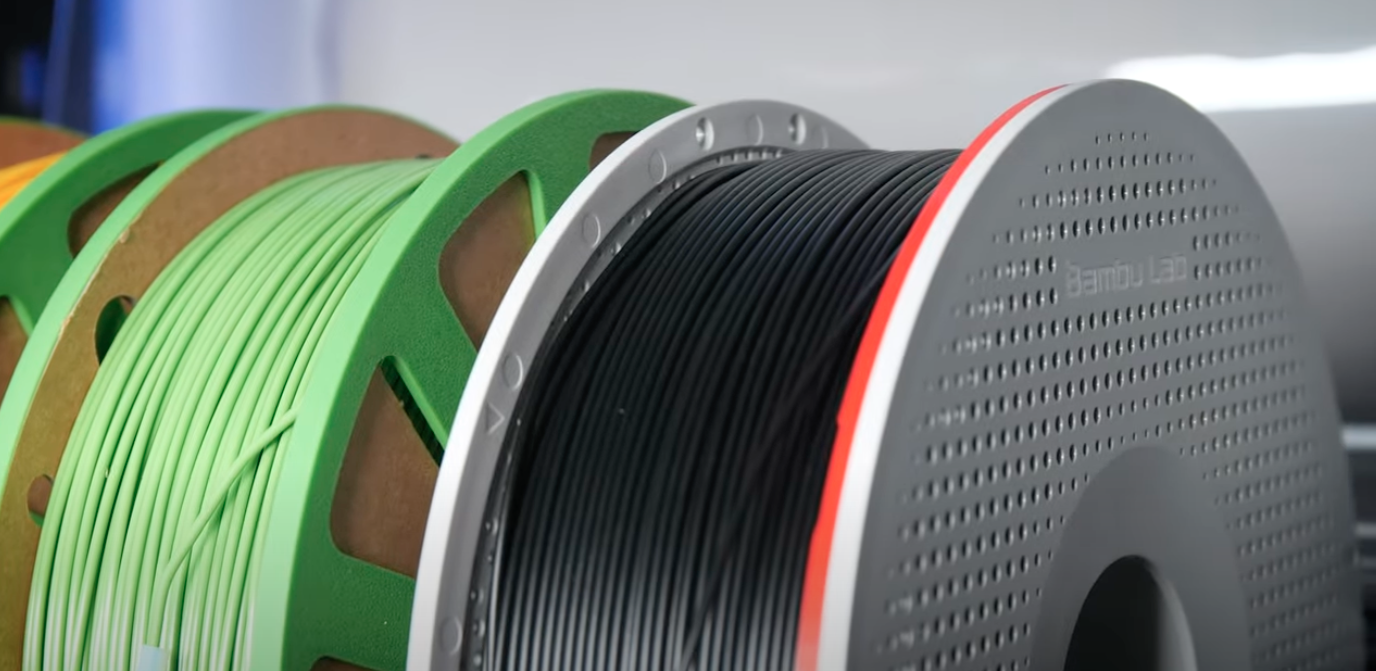
One of the clearest signals from the event was the shift in printer hardware. Bambu Lab printers are entering university makerspaces at pace — and for good reason. They’re fast, reliable, and significantly more user-friendly than legacy systems like Ultimaker.
We spoke with Simeon Newbatt, who runs the uCreate MakerSpace at the University of Edinburgh. He mentioned that uCreate are making the transition to Bambu Lab printers and the results have been significant.
|
40% |
20% |
A 40% reduction in print failures is not a minor operational improvement — it means less wasted material, less technician time on failed jobs, and a better experience for the students using the space.
The switch to Bambu Lab also opens up access to the AMS (Automatic Material System) — Bambu’s multi-filament system that enables more sophisticated print workflows. For makerspaces managing high throughput across multiple users, that’s a meaningful upgrade.
REFILL FILAMENTS FOR BAMBU LAB 3D PRINTING
Filamentive’s ReFill range is 100% compatible with Bambu Lab AMS when used with the Bambu Reusable Spool. Reduce spool plastic waste and streamline your materials workflow in one step.
What are the Recycling Barriers for University Technicians?
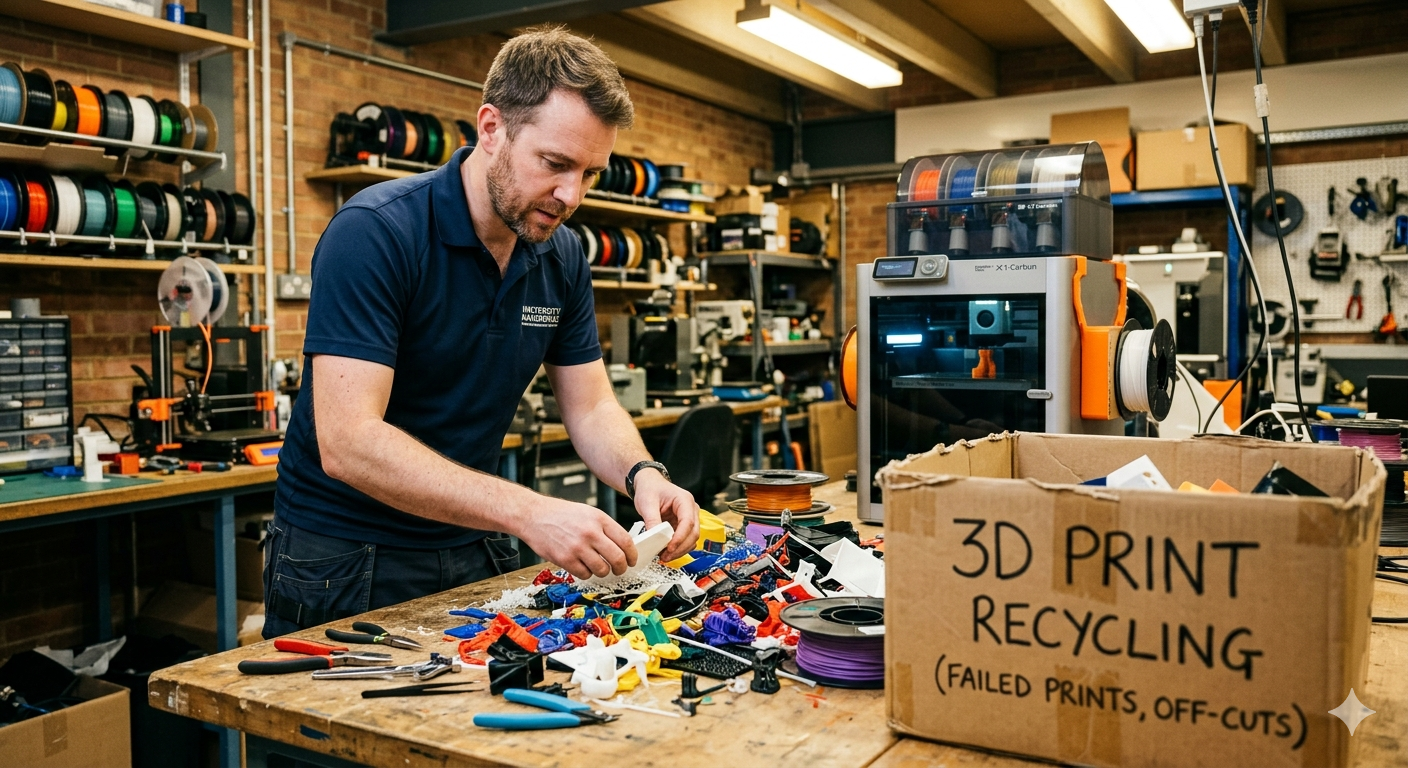
Every technician we speak to is either already recycled or wants to recycle. The barrier is never motivation — it’s time and effort.
University makerspaces generate significant volumes of PLA waste: failed prints, support structures, purge lines, end-of-reel offcuts. Without a straightforward collection process, that waste goes in the bin. Not because anyone chose landfill — but because a busy technician running a workshop with 40 students doesn’t have time to find a recycling solution from scratch.
That’s the problem we’re solving with our PLA recycling scheme. We collect waste directly from eligible customers, handle the logistics, and close the loop. The barrier to participation needs to be as close to zero as possible — and that’s what we’ve designed for.
FREE PLA 3D PRINTING WASTE RECYCLING
Eligible Filamentive customers can recycle their PLA waste for free. We collect it, process it, and keep it out of landfill — with no extra admin on your end.
3D Printing Sustainability needs Metrics, not just Intent

The conversation at TechNet Scotland made one thing clear: university sustainability teams are being asked to report on progress, not just state ambitions. Net zero commitments need evidence. Procurement decisions increasingly require it.
But in many 3D printing workshops, sustainability data collection is still limited. Technicians know roughly how much filament they’re buying. Fewer know how much waste they’re generating or what happens to it.
The management principle is simple: what gets measured gets managed. And right now, most makerspaces don’t have the data infrastructure to manage their materials footprint.
That’s where we see a clear responsibility as a supplier. We’re building the tools to provide customers with real sustainability metrics — starting with total volume of waste recycled, and, longer term, expand to include estimated CO₂ savings versus landfill disposal. If we want universities to advocate sustainable procurement internally, we need to give them the numbers.
The onus is on suppliers to provide the metrics that help institutions demonstrate progress — not just the materials.
Looking to 3D Print more Sustainably in Higher Education?
Whether you’re a makerspace manager, lab technician, or procurement lead — we’re here to make sustainable 3D printing practical, not just aspirational.
Universities, colleges, research institutes
100% AMS compatible with Bambu Reusable Spool
Check eligibility for our PLA collection scheme