

At Filamentive, sustainability has always been more than a tagline – it’s the foundation of how we operate. But we also know that in today’s crowded market, it can be hard to separate meaningful environmental action from vague claims and greenwash.
That’s why we’re proud to introduce our Material Sustainability Profiles – a new way to clearly and honestly communicate the environmental impact of our 3D printing materials.
Why We’re Doing This
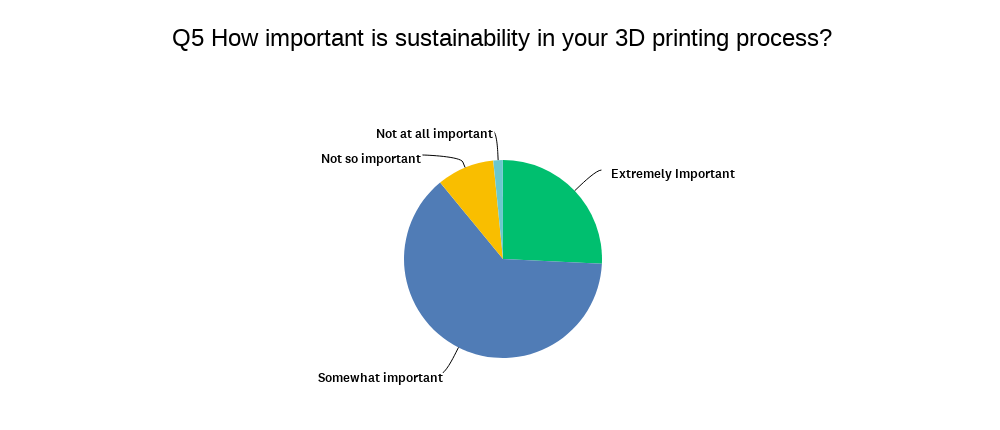
Sustainability is no longer optional. In a recent survey, 89% of respondents said sustainability is important to them in 3D printing. Yet customers often lack the clear, accessible data needed to make those responsible choices.
Our industry is filled with broad claims like “eco-friendly” or “biodegradable” – but without context, those labels can be misleading or incomplete. Transparency is essential – and our Material Sustainability Profiles aim to provide it.
What Is a Material Sustainability Profile?
A Material Sustainability Profile is a concise environmental declaration for each filament we produce. It brings together a wide range of sustainability data in one place – helping customers quickly understand the true impact of the materials they’re using.
Each profile includes:
- Product overview: Material type, polymer origin (e.g. plant-based or fossil-based), and where it’s made
- Environmental credentials: Recycled content by weight, packaging details (e.g. recyclable spool), and carbon footprint context where available
- Additives: Information on additional ingredients and how they affect recyclability or compostability
- Shipping considerations: Where the material is produced and how it’s distributed, including our use of carbon-neutral couriers
- Circularity and end-of-life guidance: Whether the material is biodegradable, industrially compostable, or compatible with Filamentive’s recycling scheme
- Certifications: Documentation of compliance with key regulations like REACH and RoHS, plus ISO quality and environmental management systems
- Quality control: Notes on in-house batch testing for consistent print performance
In short, these profiles provide both environmental and practical insight – empowering our customers to make informed, responsible choices.
Why does Material Sustainability in 3D Printing Matter?
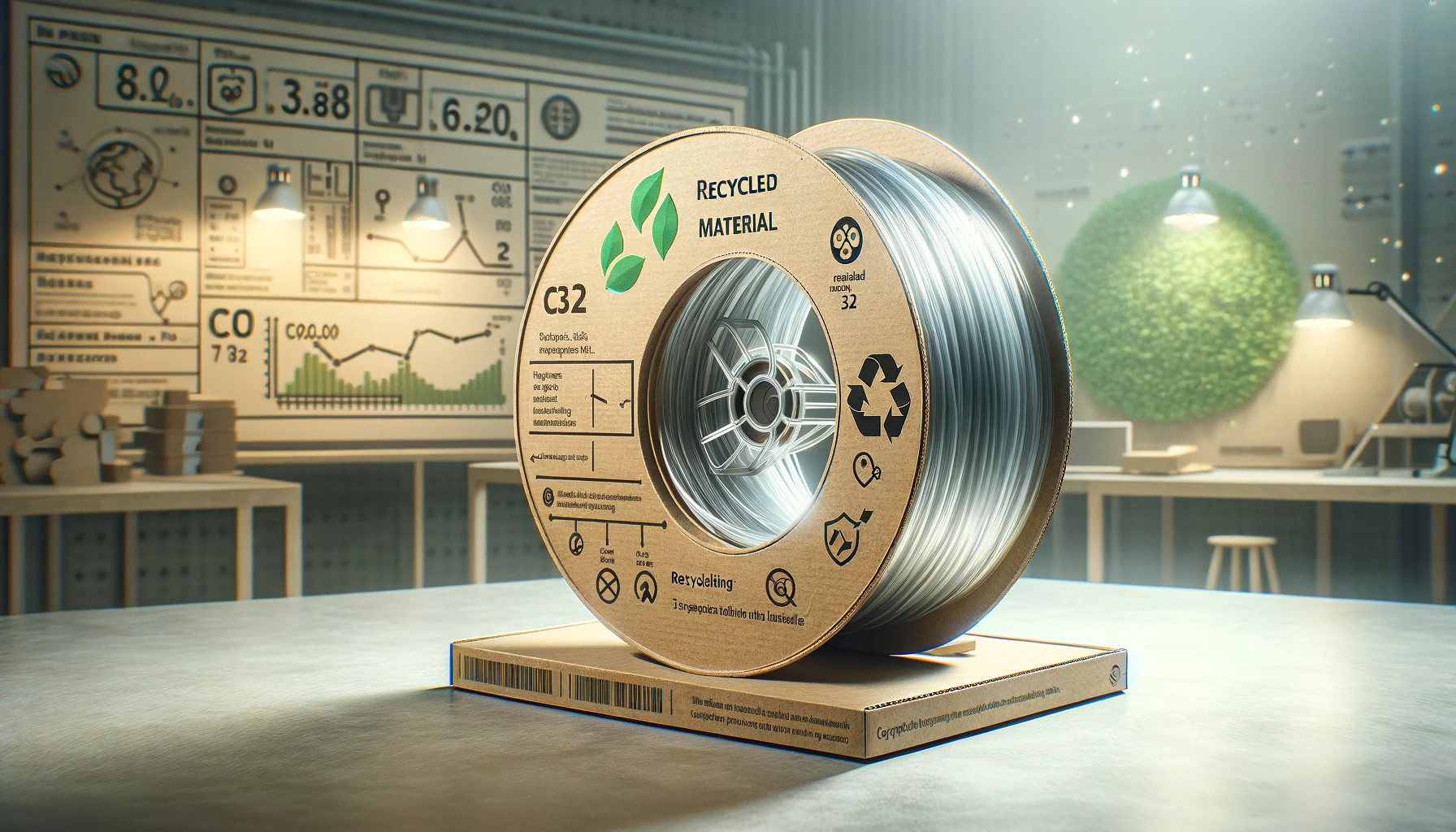
By making these profiles publicly available, we’re giving you more than just marketing claims – we’re giving you the facts.
Whether you’re part of a business measuring carbon reduction, an educator teaching sustainability, or a hobbyist trying to reduce waste, this added transparency gives you confidence in the materials you choose.
It also supports decision-making on everything from procurement and compliance to product development and reporting.
Our Commitment to 3D Printing Material Sustainability
We’re not claiming to be perfect. Some of our materials contain zero recycled content, others may not be recyclable through household waste streams and as of July 2026, we’ve yet to do our Life Cycle Analyses (LCA). But we believe that being honest about these realities is more useful than pretending otherwise.
Looking ahead, our goal is to evolve these profiles into even more robust tools – such as:
- Environmental Product Declarations (EPDs)
- Digital Material Passports
These will help us quantify our environmental impact more accurately and support broader adoption of circular practices in 3D printing.
Explore the 3D Print Material Sustainability Profiles
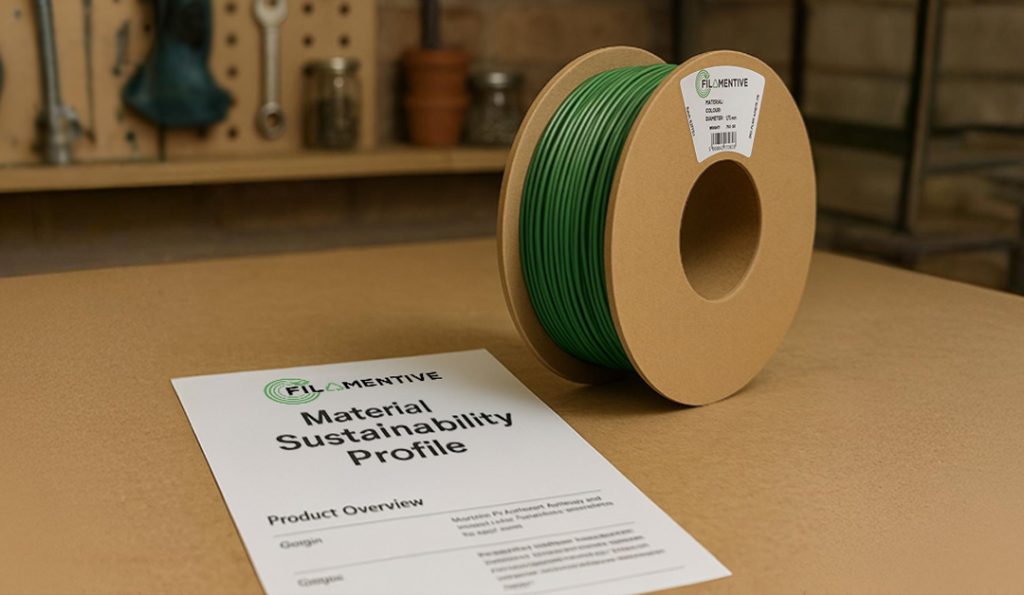
Material Sustainability Profiles are now live on our website as well as on each individual Product Page.
We hope they become a trusted reference point for our customers and a model for transparent, responsible communication in the 3D printing industry.