
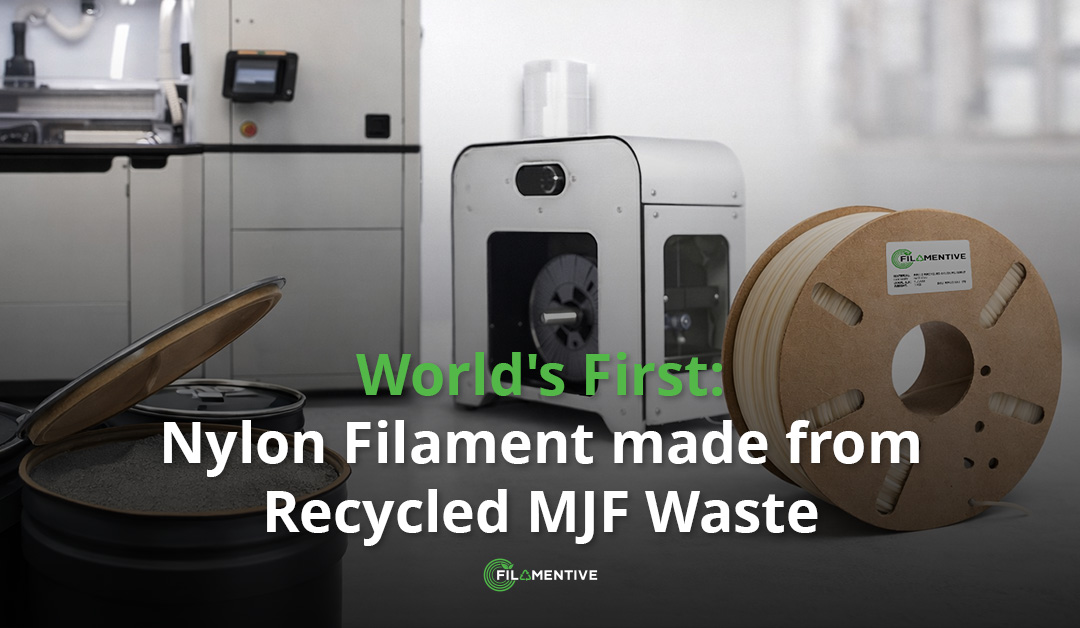
The additive manufacturing industry has made huge strides in performance and productivity—but one sustainability problem has quietly grown alongside it: unused MJF powder.
Multi Jet Fusion (MJF) is now a mainstream industrial process for producing PA12 nylon parts at scale. Yet even in well-run operations, a meaningful proportion of powder can’t be reused indefinitely and eventually becomes waste. That’s material that has already been produced, shipped, handled and stored—only to be written off at the end of the process.
Today, Filamentive is taking a practical step to change that.
We’re proud to announce Filamentive rPA12 Recycled Nylon Filament, developed with our partners 3devo and made entirely from unused MJF (Multi Jet Fusion) PA12 powder waste. In simple terms: we’re turning an industrial waste stream into a high-performance filament that engineers and 3D printing operators can actually use.
As Ravi Toor, Managing Director of Filamentive, puts it
“rPA12 is what we believe to be the world’s first commercially available filament made entirely from recycled MJF powder waste. We’re proud to be working alongside 3devo to deliver circular economy solutions that genuinely benefit 3D printing operators—not just in principle, but in practice.”
Why MJF Powder Waste Is the Problem Nobody Talks About
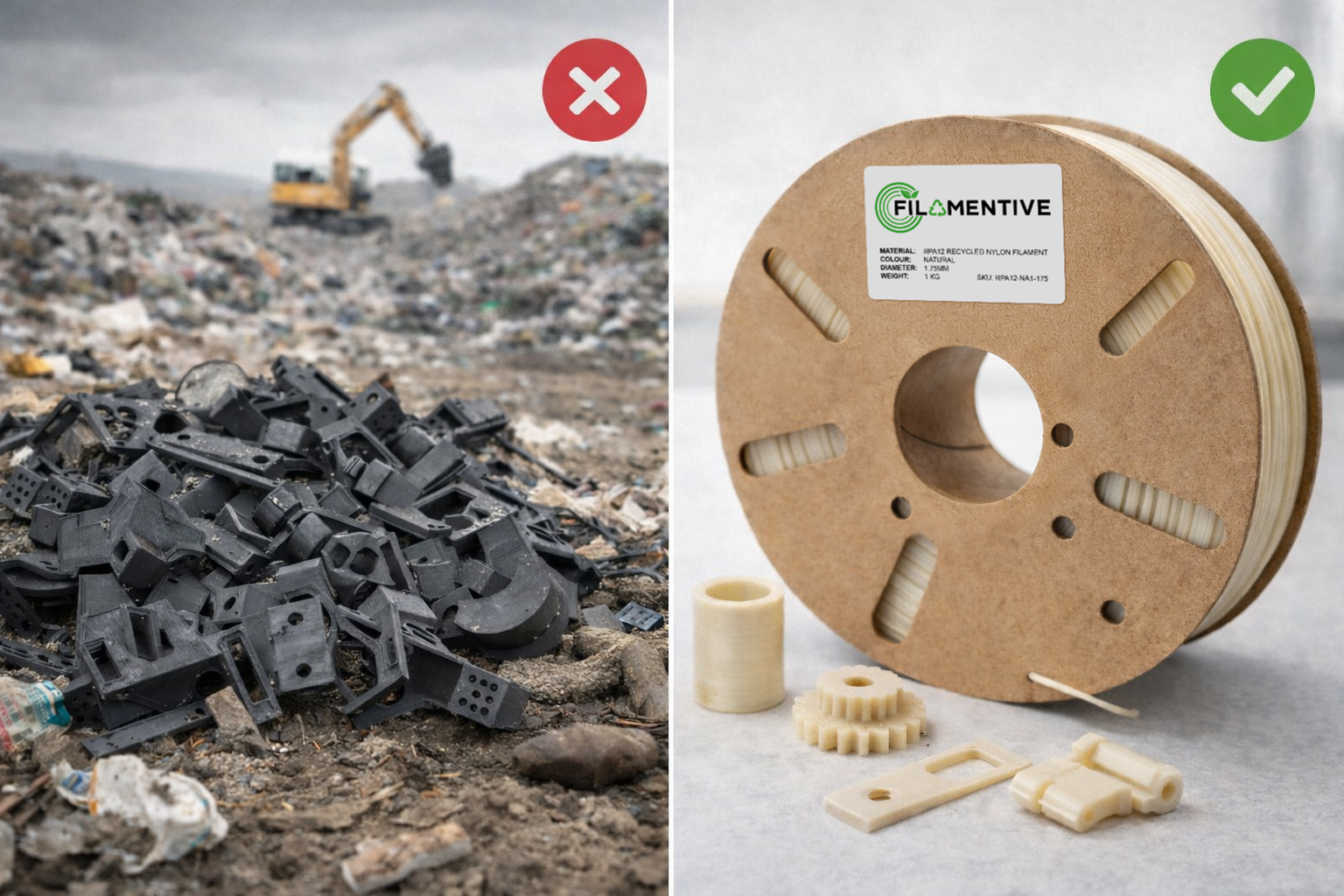
In production environments, MJF is valued for repeatability and throughput. But PA12 powder is not an infinite resource. Over time, powder ages, properties shift, and operators are forced to refresh or discard material to maintain part quality. The result is a large and growing stream of “spent” PA12 that often has no easy route back into manufacturing.
That’s why this matters. PA12 is a petroleum-derived engineering polymer. Every kilogram of wasted powder represents avoidable environmental impact and avoidable cost. If the industry wants to take sustainability seriously, it has to address waste that sits upstream—inside the production process itself—not only what happens to prints after use.
rPA12 is designed to do exactly that: keep valuable nylon in circulation.
What Is Filamentive rPA12 Nylon 3D Printing Filament?
Filamentive rPA12 is a premium recycled PA12 nylon filament made from 100% recycled MJF powder waste. It’s supplied in 1.75 mm on a 1 kg spool, extruding to a natural off-white colour. Because this is a recycled material, slight shade variation can occur from batch to batch—normal for recycled polymers and a visible reminder that you’re printing with recovered feedstock rather than virgin resin.
The goal wasn’t to create a “green” filament that only works in theory. The goal was to produce a professional nylon filament that can handle real-world applications while dramatically reducing material impact.
Why 3D-Print with Recycled PA12 Nylon?
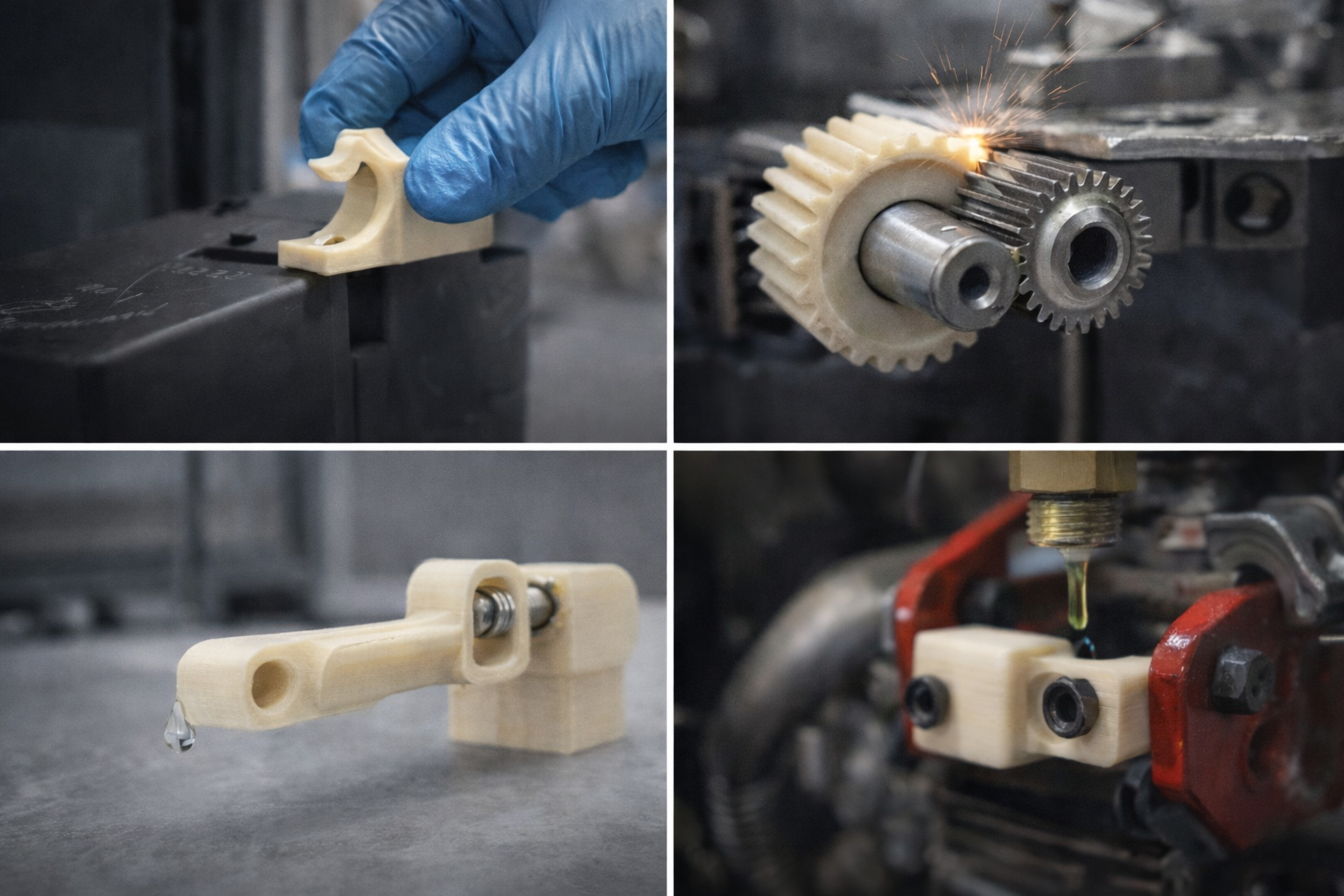
Nylon filament is one of the most widely used engineering polymers in additive manufacturing for a reason. It offers a rare balance of toughness, flexibility, chemical resistance and dimensional stability—qualities that make it suitable for functional parts, not just prototypes.
rPA12 filament retains the characteristics that make PA12 valuable, including:
Strong mechanical performance with useful flexibility
Nylon 12 combines tensile strength with elongation, which is why it performs well for clips, brackets, snap-fits and mechanically loaded components.
Heat and wear resistance for functional parts
PA12 is widely used where parts see abrasion, repeated handling, friction or elevated temperatures. That makes it well suited for jigs, fixtures, tooling aids and end-use components.
Lower moisture absorption than nylon 6
Compared to nylon 6, nylon 12 typically absorbs significantly less moisture. In practical terms, that means more stable dimensional performance and fewer issues caused by ambient humidity—although drying is still essential for best results.
Chemical resistance in demanding environments
PA12 is naturally resistant to oils, greases, fuels and many industrial fluids. For automotive, robotics and industrial environments, that resistance is often the difference between a usable part and a short-lived one.
3devo | Recycling MJF Powder Waste into Recycled Filament
This project only works if quality is consistent. That’s why we developed rPA12 with 3devo, a specialist in extrusion and circular manufacturing, using controlled MJF powder sources to keep the feedstock consistent and the output reliable.
The broader ambition is straightforward: build a repeatable pathway that takes waste from one part of the additive manufacturing ecosystem and turns it into usable material for another. That’s circularity that’s specific to 3D printing—not just recycling for the sake of it.
How Does rPA12 Fit into Real-World 3D Printing Production?
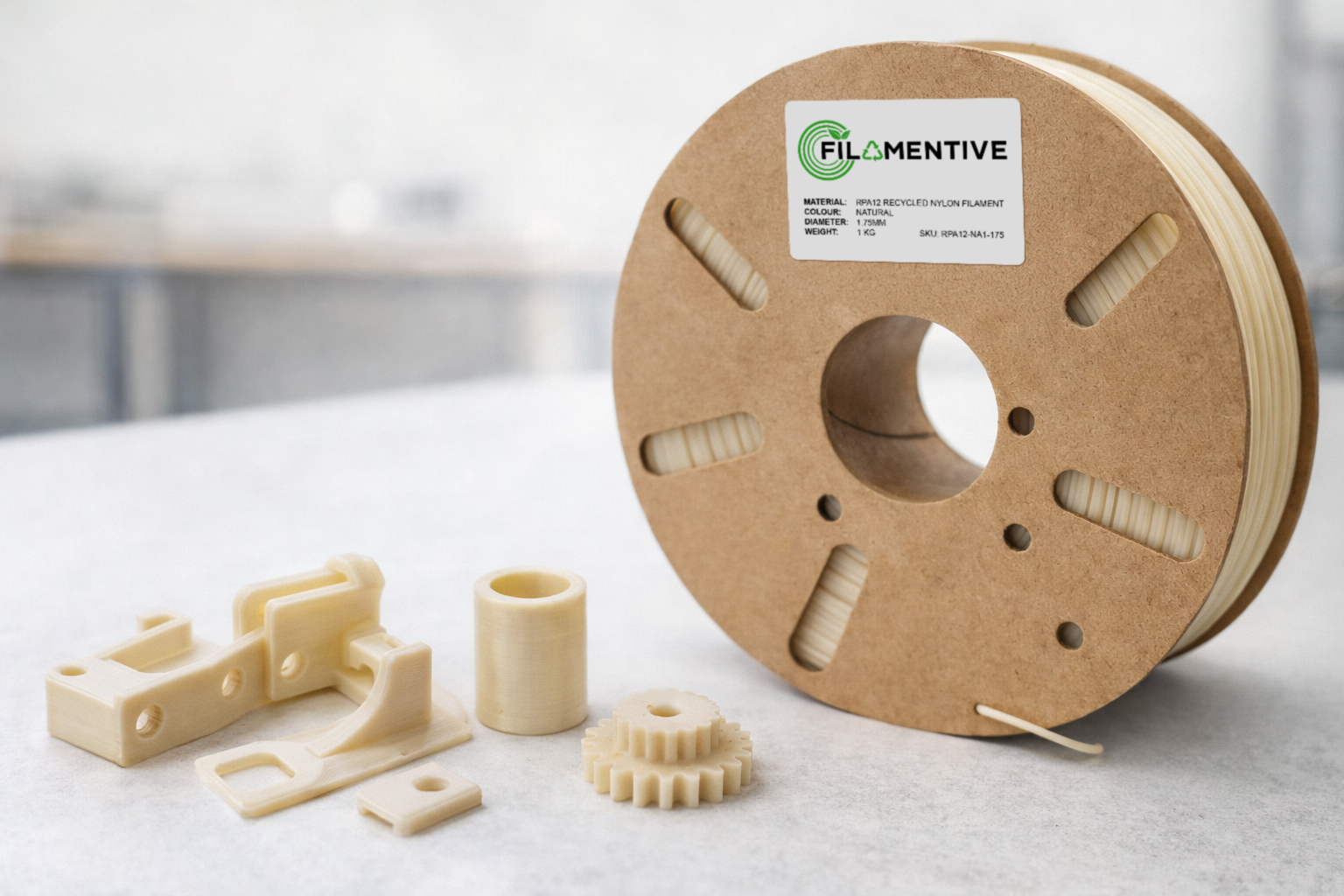
Recycled nylon is not a “novelty material”. It’s an engineering-grade polymer with a different origin story. rPA12 is designed for:
Functional prototypes and end-use parts
Gears, hinges, snap-fits, brackets, housings—parts that need to perform mechanically and survive handling.
Tooling, fixtures and workshop aids
Wear resistance and stability make it ideal for jigs and fixtures that repeatedly contact tools or assemblies.
Automotive, aerospace and robotics use cases
Strong strength-to-weight performance, chemical resistance and durability make PA12 a common choice across these sectors.
Is rPA12 Nylon a Sustainable Filament for your 3D Printing?
Yes—and importantly, it is sustainable in a way that can be explained without exaggeration.
rPA12 is made entirely from 100% recycled MJF powder waste, diverting industrial material that would otherwise be discarded. By keeping nylon in circulation, it reduces demand for virgin PA12 production and cuts CO2 emissions associated with making new polymer. It is a practical, circular solution rooted in the realities of industrial additive manufacturing rather than consumer messaging.
The spool and packaging are also designed with sustainability in mind, aligning with Filamentive’s wider mission to reduce environmental impact without compromising print performance.
A Small Step for a Spool—A Big Step for Circular AM

Most sustainability discussions in 3D printing focus on what happens after printing: disposal, recycling, “biodegradability”. Important topics, but often downstream.
rPA12 flips the lens upstream. It takes a waste stream created inside industrial additive manufacturing and turns it into a usable, professional-grade nylon filament. It is a circular economy solution that keeps value in the system and gives 3D printing operators another option: performance without the footprint of virgin nylon.
Filamentive rPA12 Recycled Nylon Filament is now available in 1.75 mm, 1 kg (Natural).
If you’re printing functional nylon parts and want to reduce material impact without stepping down performance, rPA12 is a compelling place to start.