
One of the more telling numbers in the latest polymer AM market data isn’t the headline growth figure. It’s the gap between what’s happening at the bottom of the hardware market and what’s happening at the top.
Sub-£1,000 desktop printers have been growing considerably faster than professional systems. According to VoxelMatters’ Polymer AM Market 2026 report — currently the most detailed published data on this sector — hardware overall grew 20.9% year-on-year in 2025, faster than either services (+17.3%) or materials (+15.9%). But the report’s own commentary is specific about where that hardware growth actually came from: “desktop and consumer 3D printing now account for most of the industry’s current growth,” with Bambu Lab alone now generating more annual revenue than the leading industrial polymer AM companies combined.
That matters well beyond hardware sales figures. Every one of those printers needs feeding. And what they’re increasingly printing has changed too.
How Big Is the Polymer 3D Printing Market in 2026?
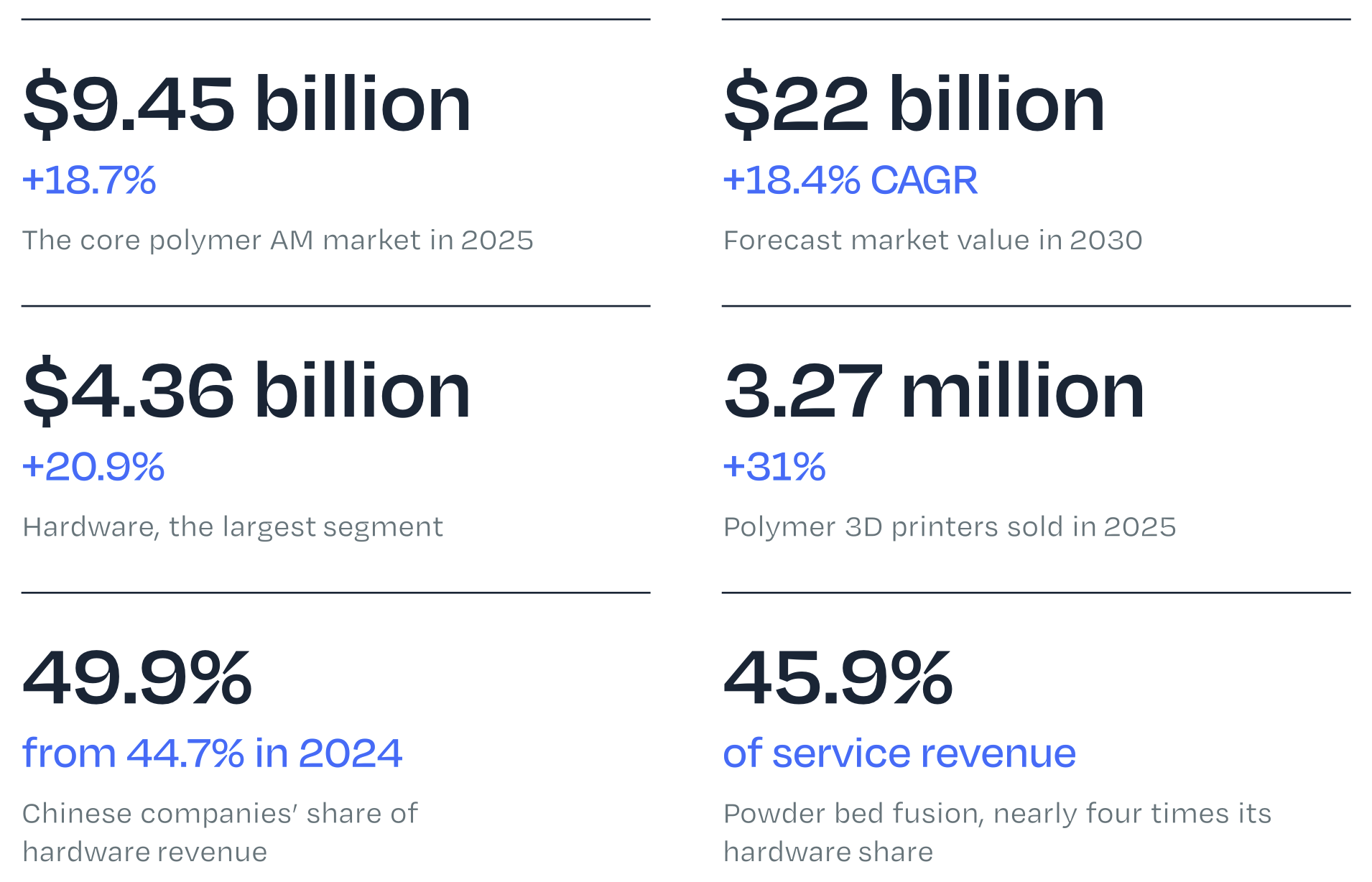
The core polymer AM market — hardware, materials and services combined — reached $9.45 billion in 2025, up 18.7% year-on-year, according to VoxelMatters’ Polymer AM Market 2026 report. Hardware was the largest segment at $4.36 billion (+20.9%), followed by services at $3.21 billion (+17.3%) and materials at $1.89 billion (+15.9%). VoxelMatters forecasts the market reaching close to $22 billion by 2030, at an 18.4% CAGR, with materials tipped as the fastest-growing segment over that forecast period — a shift from 2025, where materials actually grew slowest of the three.
Geographically, Asia-Pacific overtook North America as the largest hardware market in 2025, driven by Chinese brands including Bambu Lab and Creality. On the materials side, the report notes powder was the fastest-growing material form, driven primarily by nylon, while filament “expanded on volume, even as it faced price compression from the influx of low-cost consumer material.”
That last line is worth sitting with. It’s the entire argument of this article in one sentence: filament demand is rising, and filament pricing is falling, at the same time.
Affordable 3D Printers Are Reshaping the Installed Base
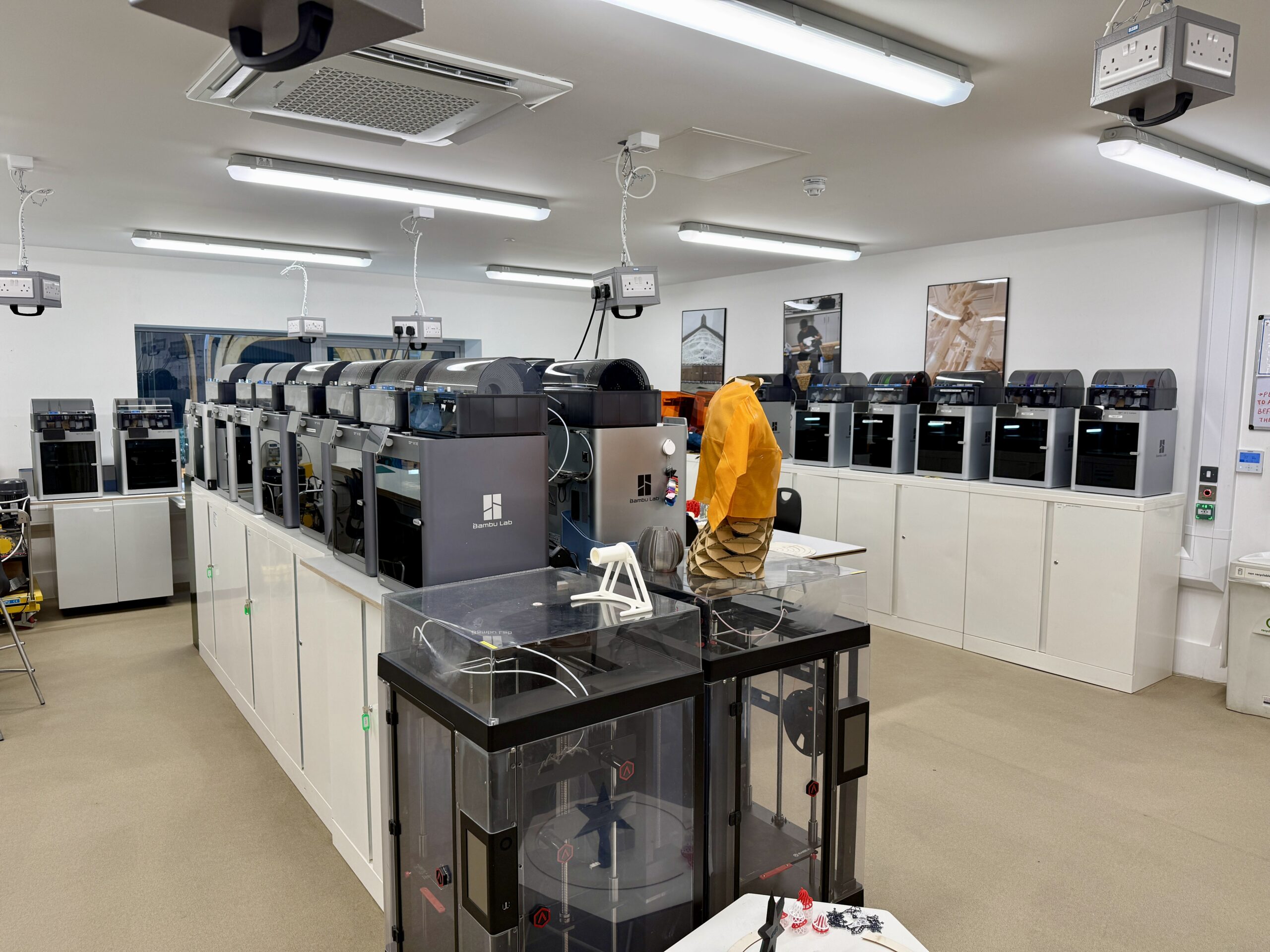
The story behind the hardware numbers isn’t really about hardware. It’s about what a much larger, much cheaper installed base does to everything downstream of it.
We’ve watched this play out directly with our own UK customer base. Bambu Lab adoption has grown quickly, particularly among Higher Education customers and professional users who aren’t simply swapping one older machine for one new one — they’re building small fleets of faster, more capable printers. Five or ten machines running regularly is a fundamentally different material relationship than a single prototyping printer that gets used occasionally. We wouldn’t claim this pattern generalises across the whole industry, but it lines up closely with what VoxelMatters is reporting at market level:
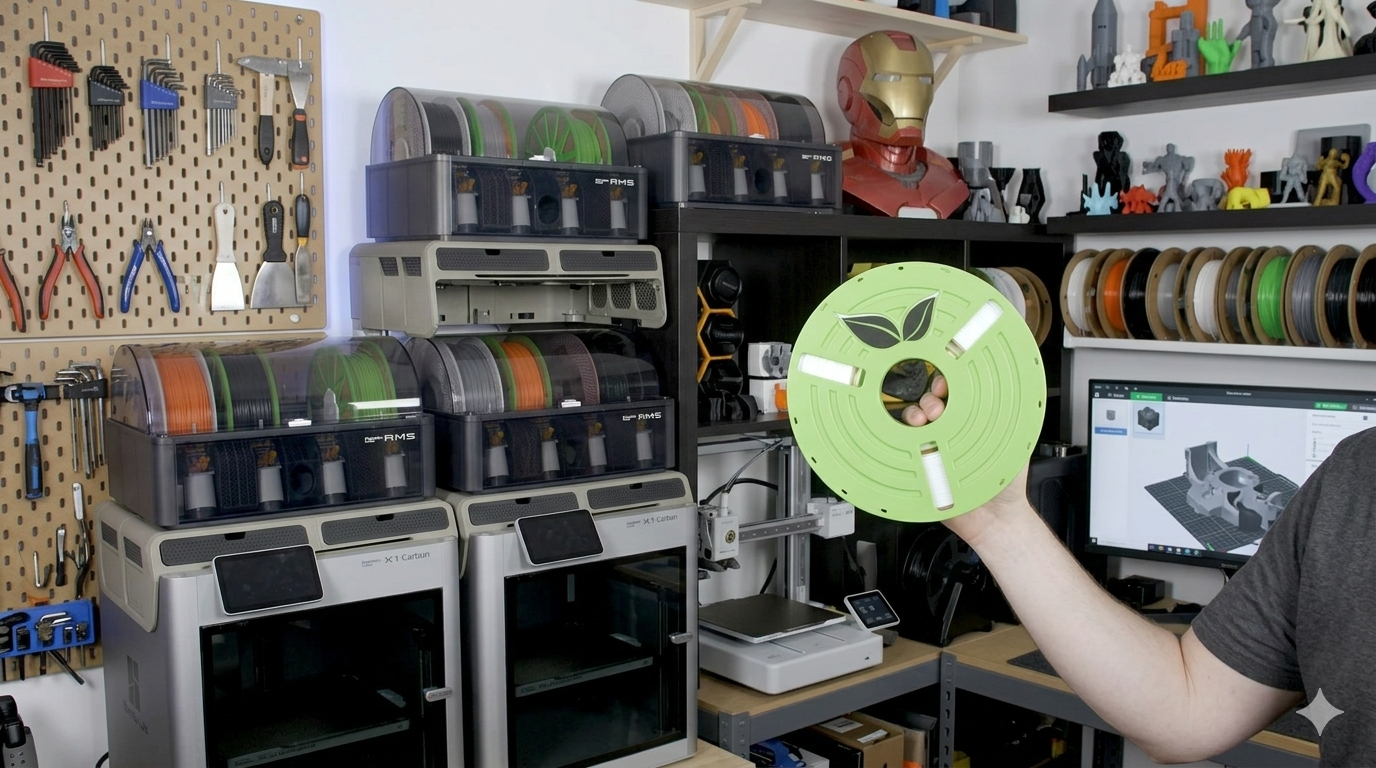
For AMS users running multi-material or higher-volume setups specifically, this also changes what a sensible filament format looks like. Filamentive ReFill — spool-less filament designed to sit on Bambu Lab’s reusable spool — exists because printing at that scale on single-use spools generates a lot of packaging that a fleet doesn’t need. It isn’t a Bambu Lab product; Filamentive isn’t affiliated with or endorsed by Bambu Lab, Inc. It’s a format decision made in response to how AMS-based fleets actually operate.
More Printers Mean More Filament — But Also More Competition
Here’s the contradiction at the centre of this: a larger installed base should mean more recurring filament revenue for the industry as a whole. And it does. But VoxelMatters’ own materials commentary makes clear that volume growth and price growth aren’t moving together — filament is expanding on volume while facing real price compression from cheap consumer-grade material flooding in behind the hardware.
That’s a genuine problem if your only proposition is £/kg. It’s a much smaller problem if the proposition includes things that are harder to commoditise: consistent tolerance batch to batch, stock actually being there when a print farm needs next day, and documentation a procurement team can put in front of an auditor.
This is where standard recycled PLA and recycled PETG sit for most users — general-purpose materials that still need to compete on price, but where recycled content, UK stock reliability and batch consistency are part of the actual value rather than a marketing line bolted onto a commodity spool. For users running larger volumes specifically, XL spool formats address a different part of the equation: fewer spool changes, fewer operator interventions, and less risk of a production run stalling overnight because nobody caught an empty spool.
3D Printing Is Moving Further From Prototyping to Production
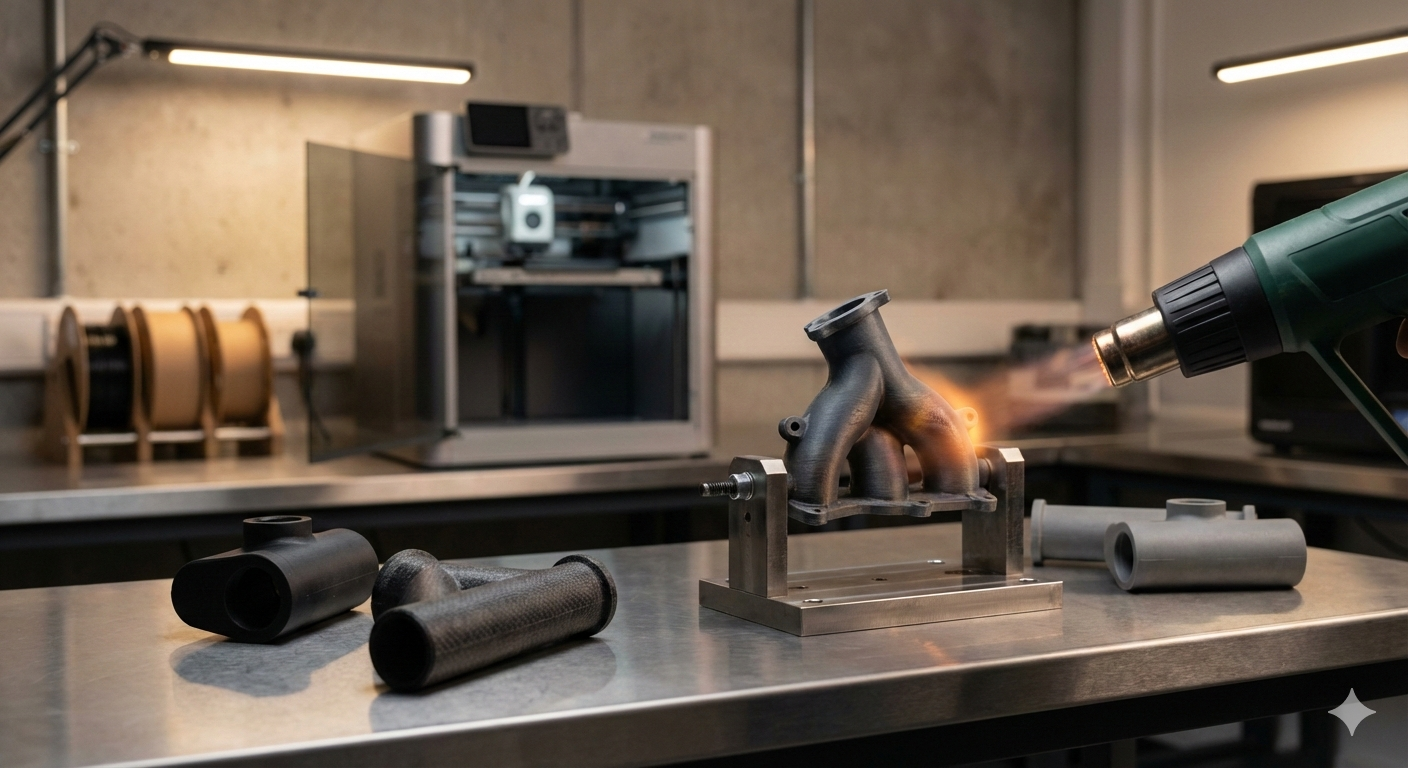
The second major shift in the 2026 report is what these printers are actually producing. VoxelMatters’ broader commentary points to production-grade and certified-series work expanding as an application category, even as undifferentiated prototyping work softened at Western service bureaus — pulled in-house by cheaper desktop systems capable of doing it themselves.
That shift raises the bar on what a filament actually needs to do. A prototype can tolerate a slightly inconsistent finish, a colour substitution, or a bit of manual post-processing. A bracket, jig or enclosure that goes into actual service can’t — it needs to perform the same way on the hundredth print as the first, and it needs to survive whatever the part is actually for.
That’s where standard PETG stops being enough for some applications, and where something like Carbon Fibre PETG becomes relevant — not as an upsell, but because a jig or fixture under real mechanical load genuinely needs the added stiffness and dimensional stability that a reinforced material provides. The point isn’t that every functional part needs an engineering-grade filament. It’s that “will this material actually hold up in use” is a question more users are now having to ask, where a few years ago the same part might never have left the prototyping stage.
What Does a Growing Printer Fleet Mean for 3D Print Waste?

Market reports are good at measuring what goes into printers. They’re much quieter on what comes back out.
More machines, running more often, on more production jobs, means more failed prints, more support material, more purge waste, and more end-of-life parts and offcuts. None of that shows up in a hardware revenue figure, but it’s a direct, mechanical consequence of the same growth curve. If a fleet has scaled from one printer to ten, the waste stream has scaled with it — whether or not anyone’s built a process to deal with it.
This is the part of the conversation that tends to get skipped in favour of hardware and material headlines, and it’s where our own thinking has landed most firmly. Filamentive runs a free PLA recycling scheme for eligible UK customers specifically because buying material is only half the equation — what happens to it once a print fails, or a part reaches end of life, is the part that hardware growth doesn’t solve on its own. Capacity without a lifecycle plan is only half a strategy.
Powder Growth: A 3D Printing Circular Economy Opportunity
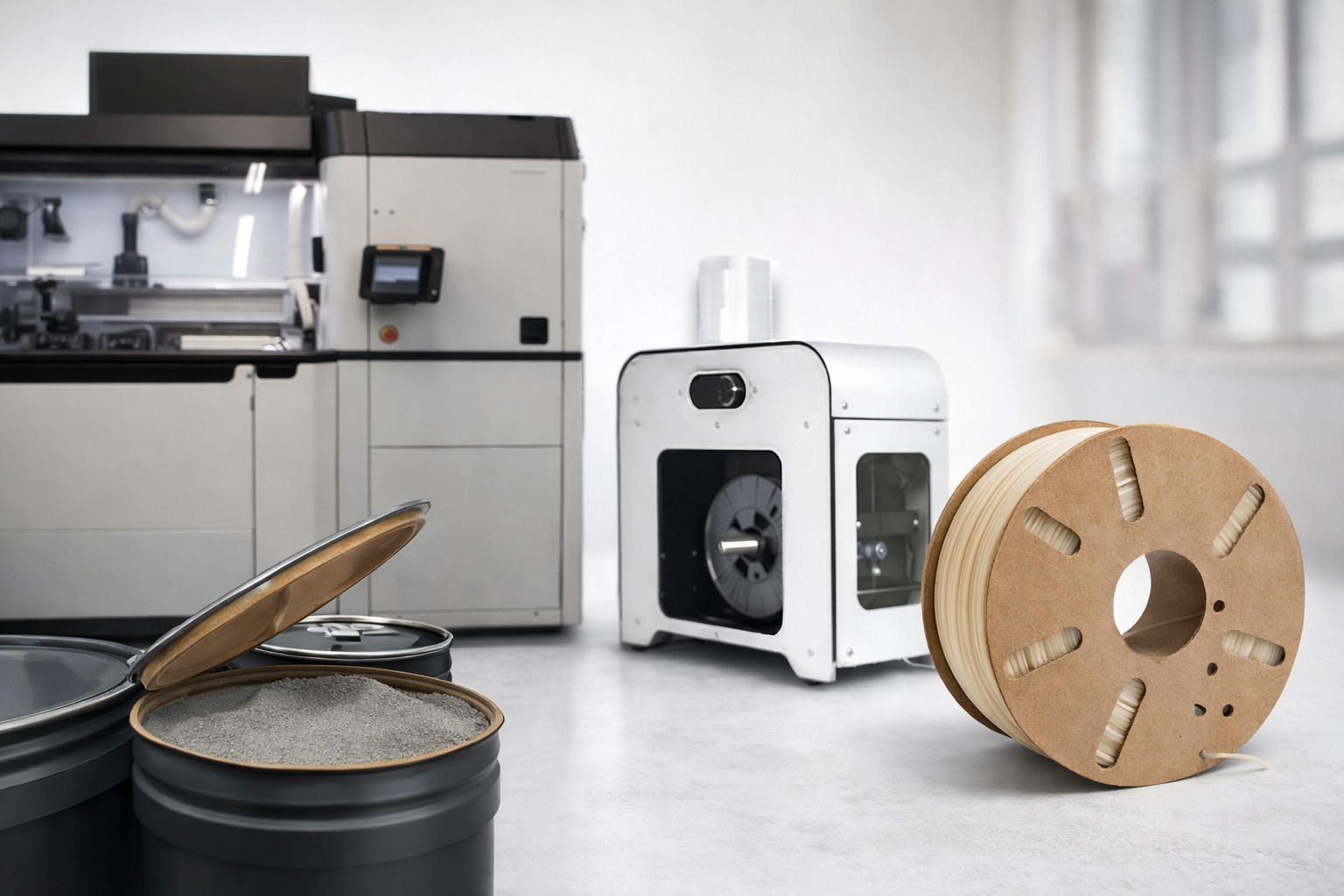
VoxelMatters identifies powder as the fastest-growing material form in 2025, with nylon as a significant driver — largely on the back of powder bed fusion processes like MJF and SLS moving further into production use. That’s a hardware and materials story on the surface. Underneath it, it’s also a waste story: powder-bed processes generate genuine volumes of used and ageing PA12 powder that isn’t always reusable within the same process.
That’s the specific gap Filamentive rPA12 — developed with 3devo — was built to close: a filament made entirely from recycled MJF PA12 powder waste, turning a byproduct of one AM process into usable feedstock for another. We’re not suggesting all waste MJF powder can be converted into filament without proper processing — it can’t, and the routes between powder-bed and extrusion material streams still need real engineering to work. But the underlying principle is one worth more attention across additive manufacturing generally: FFF and powder-bed AM don’t have to be treated as separate material ecosystems. Growth in one can quietly become an opportunity in the other, if someone builds the bridge.
3D Print Materials Market is about Value, not just Volume
Put the pieces together and a pattern holds across all of it. The industry’s first question was whether 3D printing could work at all. The next was whether it could be made affordable and productive at scale — and on the evidence of 2025, that question is largely answered. The question that’s left is less flattering to a spreadsheet: how do you use all that installed capacity efficiently, and responsibly, once it’s there?
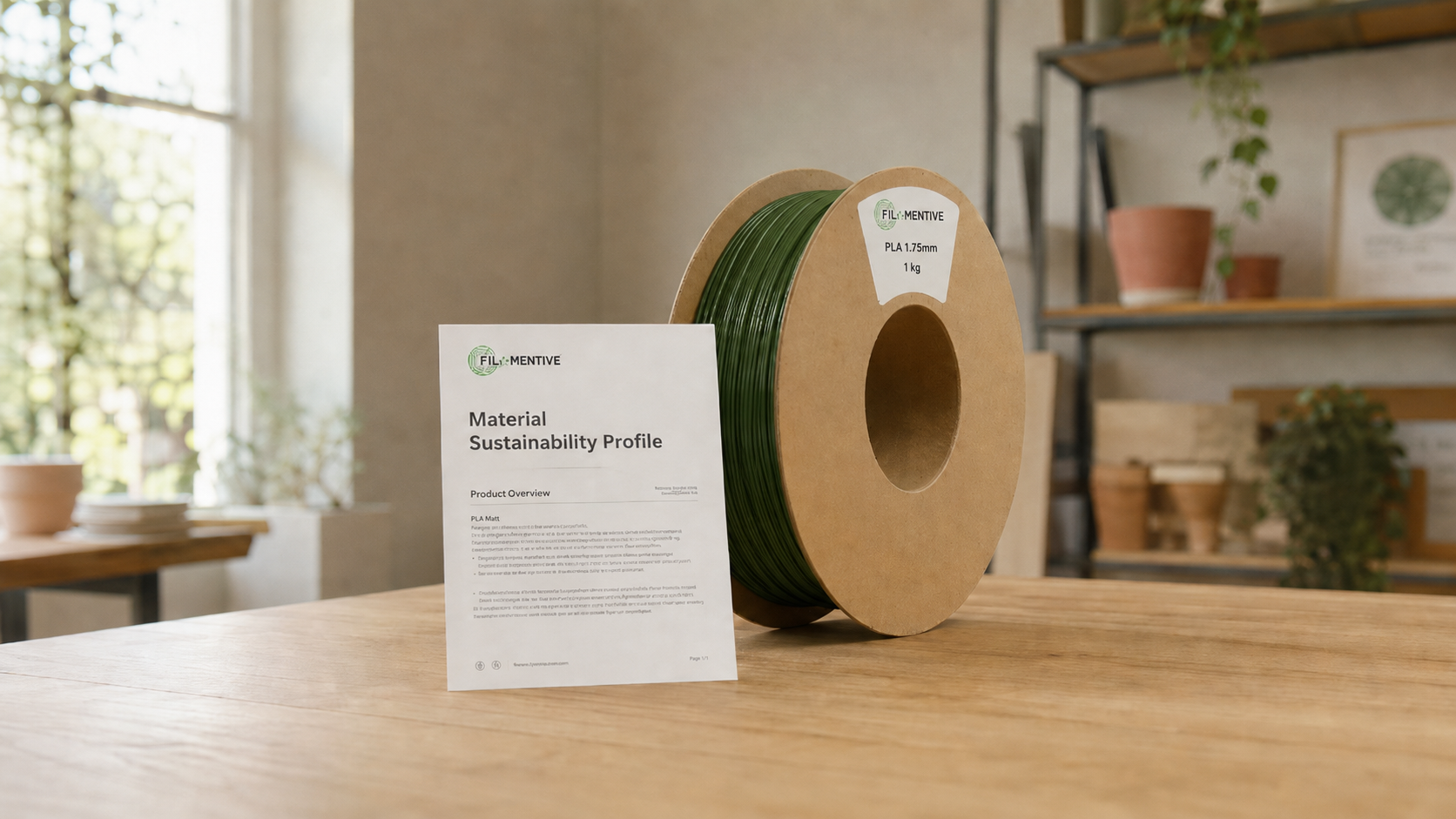
That’s a question about total material cost rather than spool price alone — supply reliability, batch-to-batch consistency, technical performance for the application at hand, and what happens to material once it’s done its job. It’s also, increasingly, a question about documentation: as more organisations buy filament through procurement processes rather than a single technician’s card, they need more than a colour swatch and a price. Filamentive’s Material Sustainability Profiles exist to answer exactly that — recycled content, origin, composition and end-of-life information in a form a procurement team can actually use, not just a sustainability claim on a product page.
What Should Professional 3D Printing Users Do in 2026?
If your printer fleet has grown over the last two years, it’s worth reviewing a short list of things that rarely get looked at until something goes wrong:
- Annual filament consumption, and whether it’s tracked at all
- How often spools are changed, and whether that’s costing more downtime than it should
- Which material types actually dominate usage, versus which ones you assume do
- What proportion of prints are now functional or end-use parts rather than prototypes
- How much failed-print and support material gets generated, and where it currently goes
- Whether there’s an actual route for end-of-life material, or whether it goes to general waste by default
- Whether recycled-content requirements apply to your procurement, now or soon
- Whether your current supplier can guarantee stock and batch consistency at the volume you’re now printing at
None of these require a big project to answer. Most of them can be answered from a spreadsheet you probably already have.
3D Printing Material Market Growth Is Only Half the Story
More printers are going into service. They’re faster, and increasingly affordable, and they’re consuming more material as a direct result. More of what they produce is going into real use, not staying on a shelf as a prototype.
None of that is in dispute — the data backs it up clearly. What’s less settled is what the industry does with that growth: whether materials keep being chosen mainly on price per kilogram, or whether reliability, traceability and end-of-life handling start to matter as much as the number on the spool label.
We think that shift is already underway, and it’s where the more interesting work in this market sits for the rest of the decade.