

At Filamentive, we don’t just supply filament to UK users —we listen. Earlier this year, we ran our 2025 Customer Engagement Survey to better understand the behaviours, preferences, and challenges of 3D printing users across the UK. With more than 100 responses – ranging from at-home 3D printer hobbyists to Education customers and Industrial 3D Print Farms, the results offer a snapshot of where the UK market is heading—and where we’re going with it.
This blog shares key findings from the survey and offers insight into broader UK 3D printing trends shaping 2025 and potentially beyond.
What Are People 3D Printing in 2025?
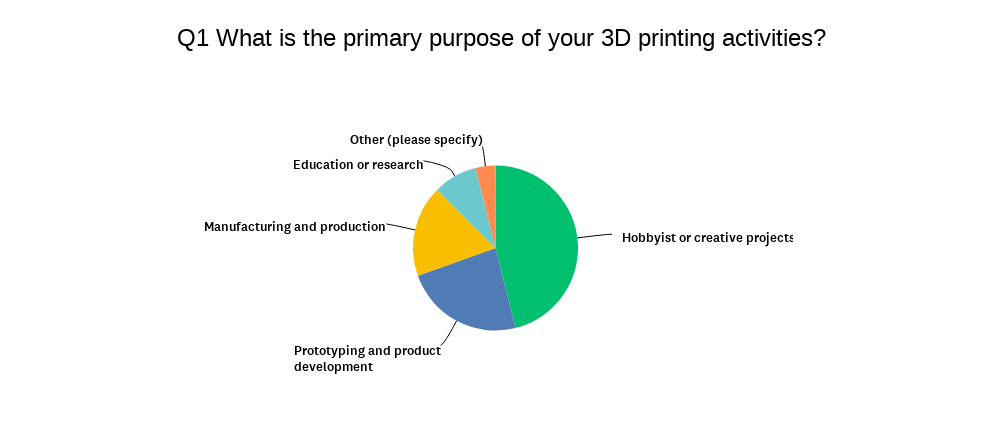
The survey confirmed that 3D printing remains a diverse ecosystem. Nearly half (46%) of respondents use 3D printing for hobbyist and creative projects, with prototyping and product development (23%) and manufacturing and production (18%) also featuring prominently. This split highlights a thriving blend of personal passion and professional application in the UK market.
Most Popular 3D Printers in the UK in 2025
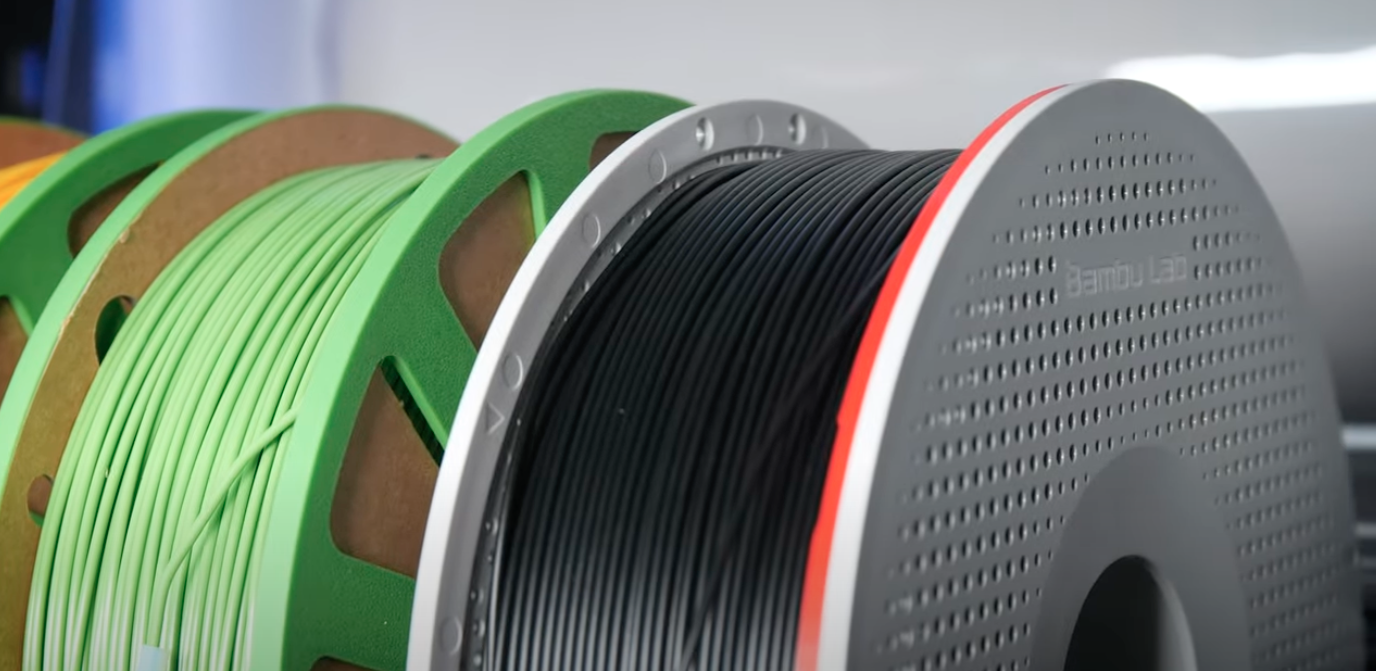
Bambu Lab has rapidly risen to the top spot, with 43% of respondents using its machines—cementing its dominance in the desktop FDM space. Prusa (30%), Creality (22%), and Ultimaker (10%) round out the top picks, with many users operating multiple machines.
The growth of AMS-compatible printers is also influencing filament expectations, creating new demand for reusable spools and high-speed-ready materials. This was the main reason for Filamentive releasing its ReFill filament line in late 2024.
For more in-depth analysis of the most popular 3D printers being used in the UK, please read this blog post.
Most Used 3D Printing Materials in the UK
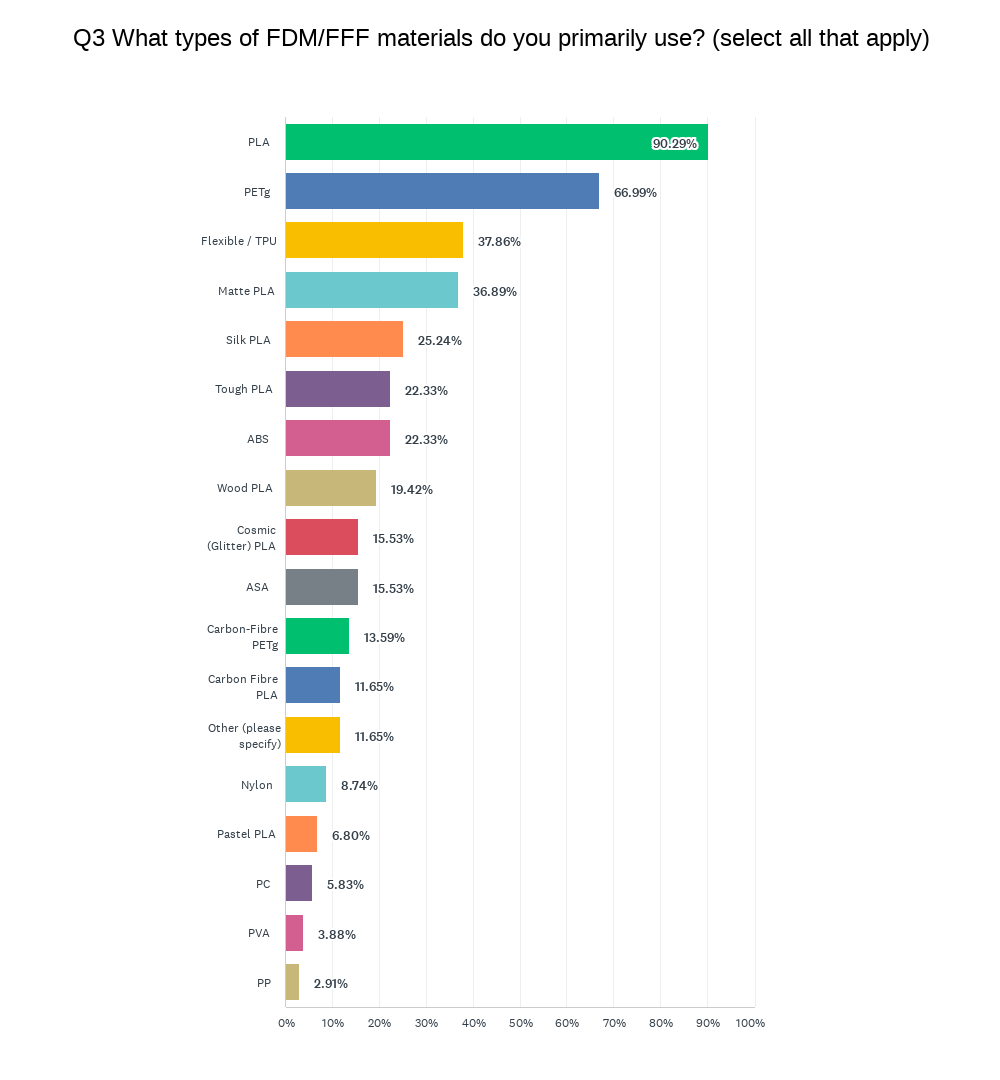
Unsurprisingly, PLA dominates—used by over 91% of respondents. PETg (62%) is the next most used, followed by Flexible TPU filament (33%), Matte PLA (36%), and Tough PLA (22%). This confirms that ease-of-use and part versatility remain top priorities.
Other trends include niche but appreciated aesthetical filaments like Glitter PLA and Silk PLA, and a steady rise in engineering-grade materials such as ABS (21%), ASA (16%), and Carbon Fibre PETg (12%), particularly among advanced and professional users
The diversity of materials in use reflects the broad spectrum of 3D printing applications. Visual filaments like PLA and Glitter PLA are likely favoured for creative or aesthetic projects, while engineering-grade materials such as ASA and Carbon Fibre PETg are typically chosen for industrial applications where performance and durability are essential.
How is 3D Printing Waste Managed in the UK?

Despite increasing awareness of sustainability, the majority of 3D printing waste is still going to landfill. Over 61% of respondents said they dispose of waste as general rubbish, while just 5% currently use Filamentive’s PLA recycling scheme. A further 19% recycle through other programmes, and 15% selected ‘other’—indicating ad hoc or inconsistent practices.This suggests an attitude-behavior gap: although the desire to act sustainably may exist, access to convenient, trusted recycling solutions remains limited.
That said, Filamentive launched the UK’s first PLA 3D print waste recycling scheme in 2024. One year on (at time of writing) over 1 tonne of PLA waste has been recycled and operators using the scheme now report recycling an average of 90% of their PLA waste. To learn more about our PLA waste recycling scheme and gain insight from operators, please read this blog post.
The Importance of Sustainability to UK 3D Print Users
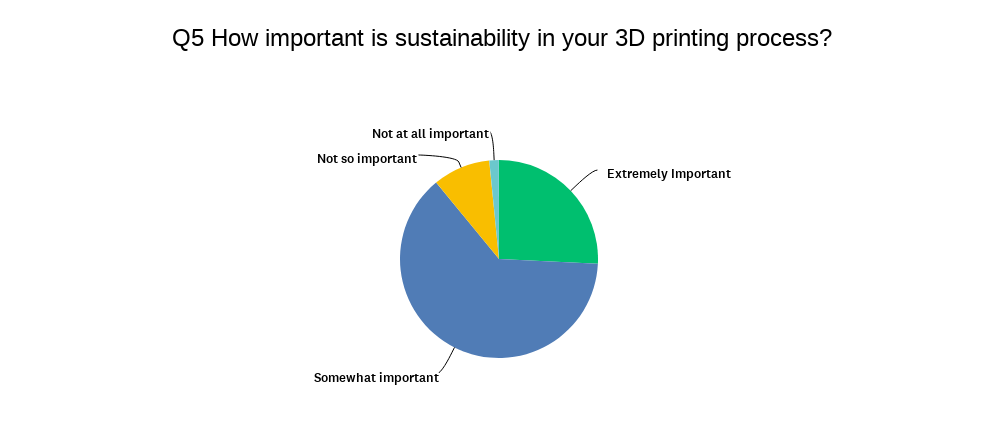
Sustainability is a clear priority for the vast majority of 3D printing users. An overwhelming 89% of respondents said it is important—26% stating it’s extremely important and embedded in every decision they make, and 63% describing it as somewhat important.
This demonstrates that environmental impact is no longer a niche concern—it’s firmly embedded in the mindset of the UK 3D printing community. While some barriers remain in turning intent into consistent action, the demand for accessible, credible solutions is growing.
Filamentive was founded on the belief that 3D printing should not come at the cost of the planet. To help bridge the gap between values and action, we offer a range of initiatives:
♻️ Recycled Materials: Many of our products contain 50–100% recycled content, helping to reduce virgin plastic use at scale.
Sustainable Packaging: All ≤2.3kg filaments are supplied on 100% recyclable cardboard spools or spool-less ReFill to minimise hard-to-recycle plastic .
PLA Recycling Scheme: As the UK’s first free PLA waste collection programme, we enable individuals, schools, and businesses to responsibly dispose of failed prints and offcuts.
Local Sourcing: By operating from the UK and prioritising European supply chains, we reduce emissions and provide faster, more sustainable delivery options.
The Challenges UK 3D Printing Users are facing in 2025
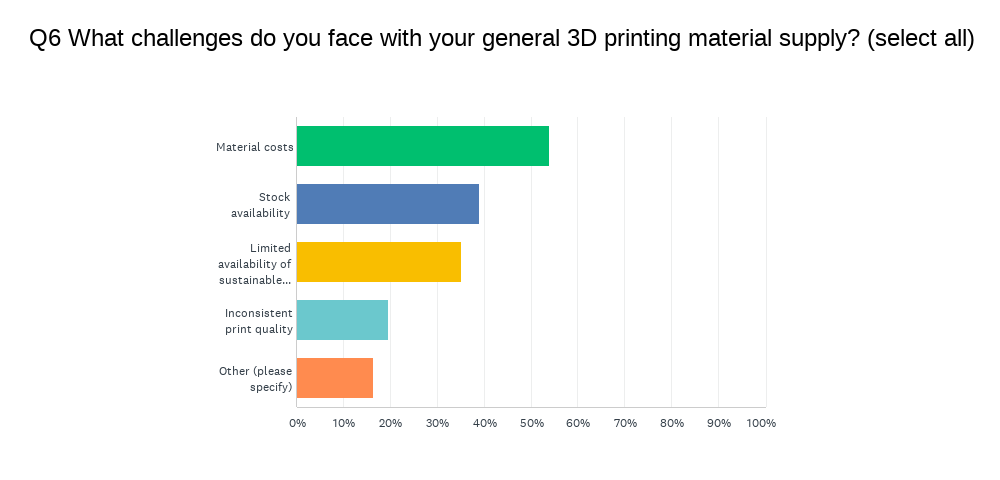
When asked about material supply challenges, the top concerns were material costs (54%), stock availability (39%), and limited sustainable options (35%). Affordability and reliability continue to be key friction points—especially for frequent users and small businesses scaling up their production.
Recent closures of UK filament suppliers such as 3D FilaPrint signal growing pressure in the 3D printing materials market. Even global players like KIMYA and Forward AM (BASF) have faced insolvency or ceased operations, citing slow industrial growth, post-pandemic recovery challenges, and geopolitical instability. These events highlight the importance for operators to diversify supply chains, prioritise supplier resilience, and stay agile as proprietary ecosystems and shifting expectations continue to reshape the landscape.
What Buyers Value in a 3D Printing Filament Supplier
When selecting a filament supplier, customers prioritise product quality and reliability (84%), followed by price and affordability (80%), UK sourcing/local supply (61%), sustainability (53%), and customer service (29%). This reflects a growing desire for well-rounded value—where price, performance, service, and environmental responsibility all play a role in decision-making.
Filamentive regular listen to the needs of UK customers which is why we offer:
- 60-day Money Back Guarantee
- Trade Pricing + 30% auto-discount on any order above £99+VAT
- Legitimate British Business, dispatched from UK Stock
- Commitment to Sustainability
Closing Thought: A UK 3D Print Market Evolving

The UK 3D printing landscape in 2025 is maturing rapidly. No longer confined to hobbyist corners or prototyping labs, additive manufacturing is becoming a core part of both creative and industrial workflows. With this evolution comes greater scrutiny—users now expect more from their materials: better quality, better value, and a lighter environmental footprint.
Our survey reveals a community that is engaged, values-driven, and ready to embrace sustainability—if the solutions are accessible and reliable. From material choice to waste management, the opportunity to align everyday 3D printing with long-term environmental responsibility has never been clearer.
As 3D printing moves firmly into the mainstream, one thing is certain: the future of additive manufacturing will be defined not just by what we can create—but by how responsibly we do it.